
Self-Drive or Operated Spider Lift Hire: Which Is Right for Your Job?
Trusted by















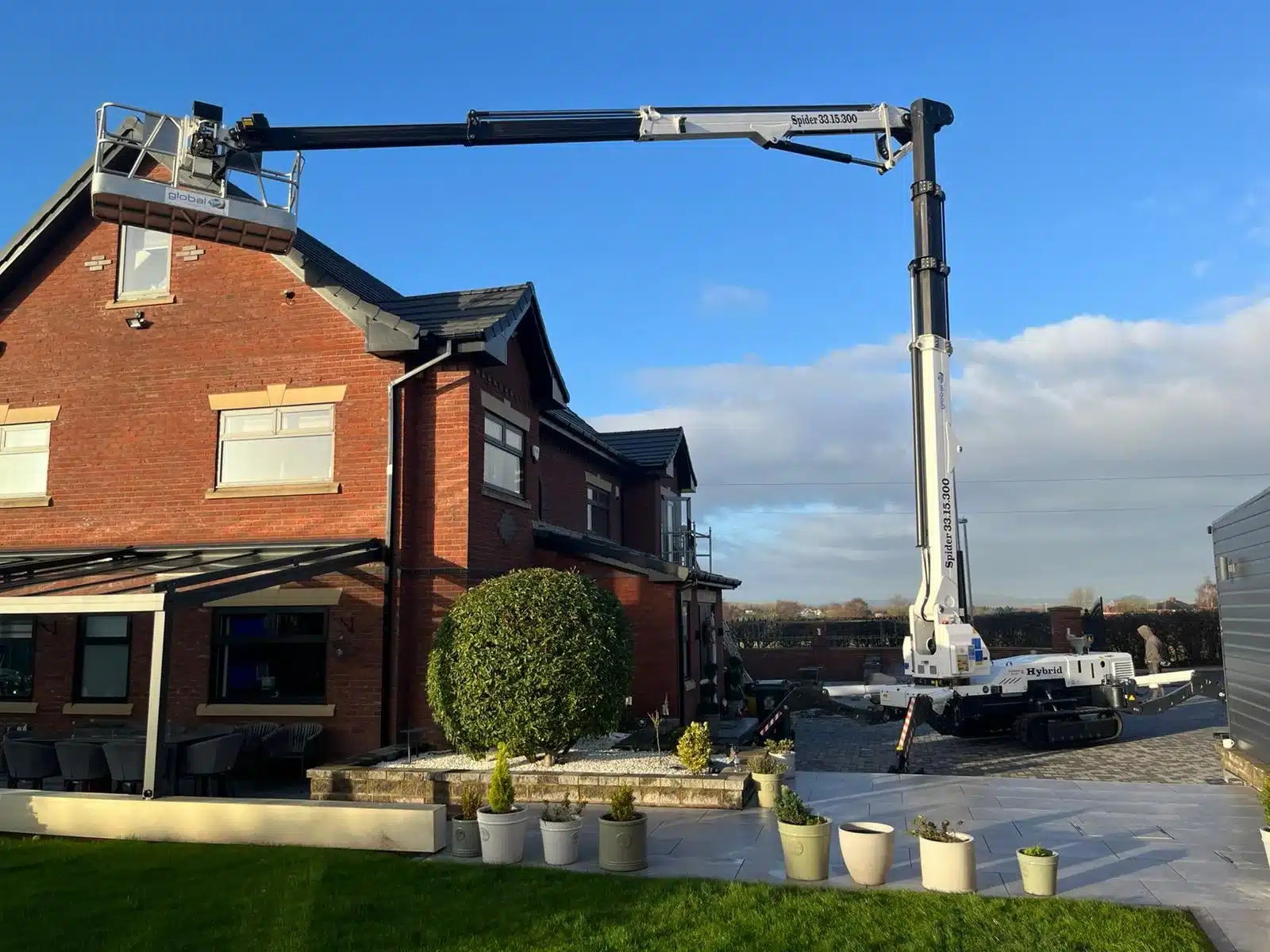
When you hire a tracked spider lift from us, you can take it self-drive and use your own trained operator, or take it operated, with one of our operators running the machine. Both get the job done safely. The right choice depends on who you have on site, how long the job runs and how tricky the set-up is.
Key takeaways
- Spider lifts sit in IPAF category 1b (static boom), so a self-drive operator needs a PAL card covering 1b plus familiarisation on the specific machine.
- Self-drive suits teams with trained operators, longer hires and flexible working hours.
- Operated hire suits one-off jobs, complex set-ups and sites where nobody holds the right card.
- Either way, you still need a rescue plan, safe ground, an exclusion zone and a machine with a current thorough examination.
The Difference at a Glance
| Self-drive hire | Operated hire | |
|---|---|---|
| Who runs the machine | Your own operator | A Global Platforms operator |
| Training needed on your side | IPAF PAL card in category 1b, plus familiarisation on the model being hired | None for operating, though your team still needs to plan and supervise the work |
| Who directs the work | You | You. Under CPA hire conditions, a supplied operator works under the direction and control of the hirer |
| Set-up and stowing | Your operator, following the manufacturer's instructions | Our operator, who knows the machine inside out |
| Best for | Repeat or longer hires, maintenance teams, out-of-hours work | One-off tasks, complex or sensitive sites, short notice jobs |
What Self-Drive Hire Involves
With self-drive, the machine is delivered to site and your own operator takes it from there. IPAF classes tracked spider lifts as static booms, category 1b, because they are set up on outriggers before the boom is raised. Your operator needs a valid PAL card that covers 1b. A card for scissor lifts (3a) or self-propelled booms (3b) on its own does not cover a spider lift.
A PAL card shows someone is trained in a category of machine. It does not make them familiar with every model in that category. Controls, outrigger set-up and safety systems vary between manufacturers, so the operator also needs familiarisation on the exact machine before using it.
Self-drive makes sense when
- You already have staff trained in category 1b, such as a facilities or estates team
- The hire runs for days or weeks, so having your own operator on hand is more practical
- Work happens out of hours or around a changing schedule
- The site is straightforward, with firm, level ground and clear access
What Operated Hire Involves
With operated hire, one of our operators arrives with the machine, sets it up and runs it for the duration of the job. Your team tells the operator what needs doing and stays in charge of the work area. You get someone who uses that machine day in, day out, which counts for a lot on awkward sites.
Operated hire makes sense when
- Nobody on site holds a PAL card in category 1b
- It is a one-off job, so training someone would cost more time than it saves
- The set-up is complex, such as an atrium, a glass courtyard, a heritage building or uneven ground
- You want the person at the controls to be the one who planned the set-up

What Stays the Same Either Way
Choosing operated hire does not hand over every responsibility, and choosing self-drive does not mean you are on your own. Whichever option you pick, these points still apply:
A current thorough examination
MEWPs lift people, so LOLER requires a thorough examination at least every 6 months. We supply the current report with every machine.
Daily pre-use checks
The machine should be checked before use each day, following the manufacturer's checklist and the operator's training.
Safe ground
The ground or floor has to take the outrigger loads. This is one of the most common causes of MEWP incidents, so it needs checking before the machine arrives.
A rescue plan
Someone on the ground must know how to bring the platform down if the operator cannot, and must be there whenever the machine is in use.
An exclusion zone
Barriers keep people and vehicles away from the outriggers and the area under the platform.
Questions to Answer Before You Book
Whichever way you go, these details help us match the right machine to the job and give you an accurate quote:
- The working height and how far out you need to reach
- The narrowest point on the route in, such as a doorway, gate or passageway
- The ground surface where the machine will set up, and whether it is indoors or out
- Whether you need electric or hybrid power for indoor or low-noise work
- How long you need the machine for, and whether you have a 1b-trained operator
Self-drive or operated, we have you covered
Browse our tracked spider fleet or tell us about the job and we will recommend a machine.
Frequently Asked Questions
Do I need an IPAF licence to operate a spider lift?
On self-drive hire, the operator should hold a valid IPAF PAL card covering category 1b, static boom, which is the category for tracked spider lifts. On operated hire, our operator runs the machine, so your team does not need the card to operate it.
Which IPAF category covers tracked spider lifts?
Tracked spider lifts fall under category 1b, static boom, because they are set up on outriggers before the boom is raised. Cards covering only 3a scissor lifts or 3b self-propelled booms do not cover a spider lift.
Is a PAL card enough to use any spider lift?
Not on its own. A PAL card shows training in a category of machine. The operator also needs familiarisation on the specific make and model, because controls, outrigger set-up and safety systems differ between manufacturers.
Who is responsible for the operator on operated hire?
Under CPA hire conditions, an operator supplied with the plant works under the direction and control of the hirer. You decide what work is done and keep control of the work area, while our operator handles the machine itself.
Is operated hire more expensive than self-drive?
Operated hire includes the operator’s time, so the hire rate is higher. It can still work out better value for one-off or short jobs, because you avoid training costs and the time it takes to get someone familiar with the machine.
Can a spider lift be used indoors?
Yes. Many tracked spider lifts have electric or hybrid power options for low-noise, low-emission indoor work, and their light weight and narrow tracks suit shopping centres, atriums and warehouses. Floor load capacity still needs checking first.
Who checks the ground before the machine is set up?
The hirer is responsible for the site, including ground conditions, whichever hire option you choose. We will talk through the set-up area when you book and advise on machine choice and spreader pads.
How do I know the machine is safe to use?
Every MEWP must have a thorough examination at least every 6 months under LOLER. We supply the current report with each machine, and the operator should complete pre-use checks every day.
Do I need a rescue plan for a spider lift?
Yes. Someone trained in the ground controls must be on hand whenever the platform is in use, so they can lower it if the operator cannot. This applies to both self-drive and operated hire.
Recent Posts

TG20:21 Compliance Sheets Explained: When Does a Scaffold Need a Design?
What TG20:21 compliance sheets are, when a scaffold needs a specific design instead, and what paperwork to ask your scaffolding contractor for.

Pit Boards and Inspection Pit Safety in Train and Vehicle Depots
Inspection pits are a work at height hazard. How pit boards, edge protection and safe pit access keep depots and workshops safe.

Mobile Access Towers Explained: When a Tower Beats Scaffolding
When a mobile access tower is the right choice, how towers should be built and inspected, and when scaffolding or a spider lift is the better option.
Our Services
Tracked Spiders
Available to rent with a wide range of sizes and specifications
Bespoke Platforms
Available to rent with a wide range of sizes and specifications
Truck Mounts
Available to rent with a wide range of sizes and specifications
Scaffolding
Available to rent with a wide range of sizes and specifications
Let’s work together and create a
safer working environment for all.
Ask for a survey and outline design. We’ll compare temporary, semi-permanent and fixed options, and recommend the most efficient route for your site. You get predictable costs, a shorter programme, and it’s right first time.