

Ground Conditions for Spider Lifts: What to Check Before the Machine Arrives
Trusted by















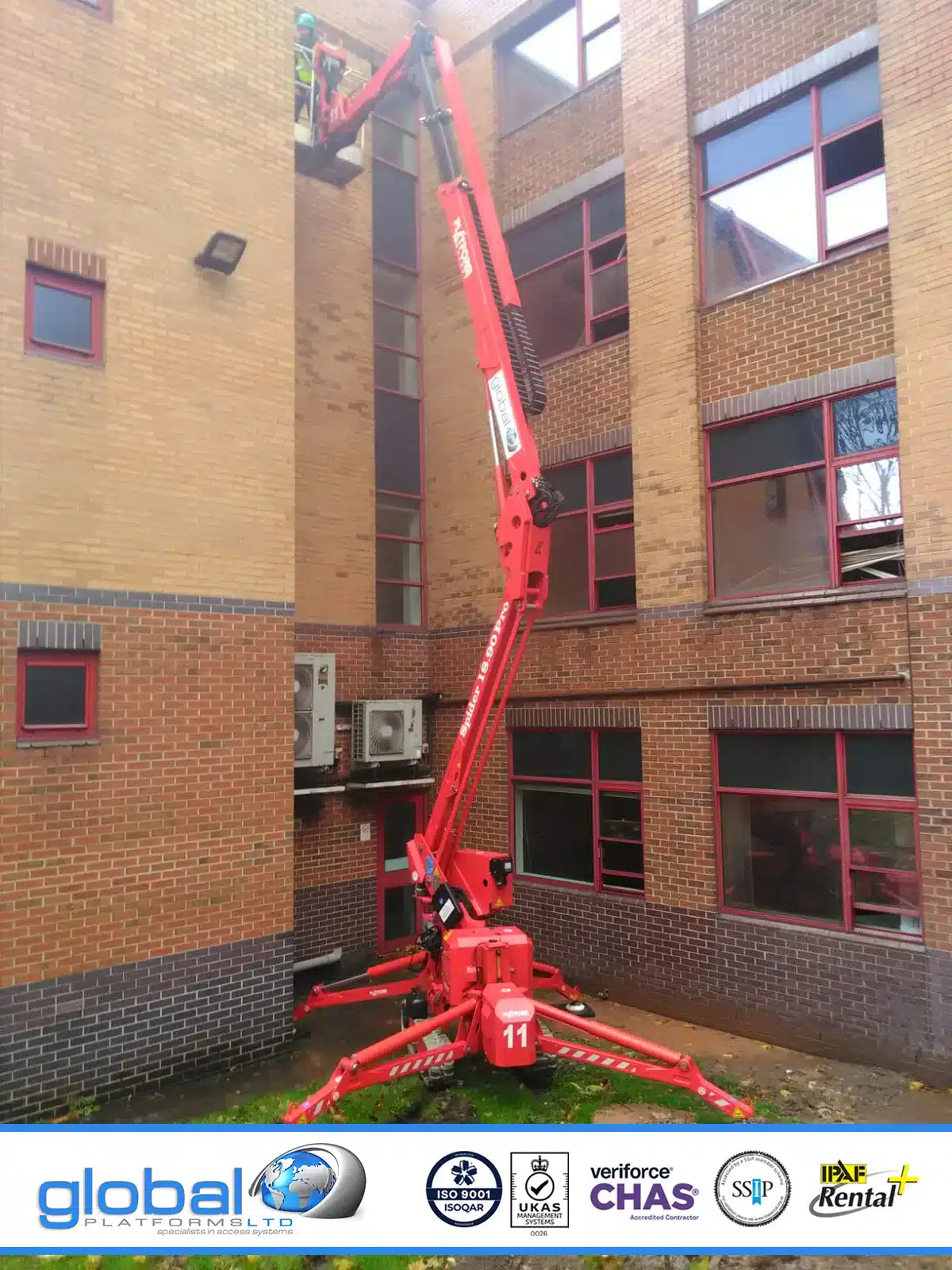
A tracked spider lift is only as stable as the ground under its outriggers. Once the machine is set up, its whole weight, plus the people and tools in the basket, goes down through four small feet. Checking the ground before the machine arrives is one of the simplest ways to keep a job safe, and one of the most often skipped.
Key takeaways
- Outriggers concentrate load into a small area, so they press on the ground far harder than a car tyre does.
- Spreader pads should go under every outrigger foot, whatever the ground looks like.
- Hidden voids, such as cellars, drains and backfilled trenches, cause more problems than obviously soft ground.
- Ground that is fine in a dry week can lose much of its strength after heavy rain or a thaw.
Why Ground Conditions Matter So Much
Pressure is force divided by area. Spread a load over a large area and the pressure is low. Put the same load through a small outrigger foot and the pressure shoots up. IPAF puts it simply: a car tyre presses on the ground at around 2.4 bar, while a typical MEWP outrigger without a spreader pad can exceed 13.8 bar.
Source: IPAF guidance on the assessment of ground conditions.
If the pressure under a foot is more than the ground can take, the foot sinks. As it sinks, the machine tilts, and the further the boom is extended the faster a small tilt becomes a serious one. Modern spider lifts have outrigger interlocks and tilt alarms, but those systems cannot make weak ground stronger.
How Much Load Different Ground Can Take
Every site is different, and only a proper assessment gives a figure you can rely on. As a guide, BS 8004 gives typical allowable bearing values for undisturbed ground like these:
| Ground type | Typical allowable bearing value | What it means for a spider lift |
|---|---|---|
| Soft clays and silts | Less than 75 kN/m² | High risk. Large mats or a different set-up position are usually needed. |
| Firm clays | 75 to 150 kN/m² | Workable with correctly sized spreader pads, but keep an eye on it after rain. |
| Medium dense sand | 100 to 300 kN/m² | Generally reasonable, but watch for edges, slopes and washout. |
| Stiff clays | 150 to 300 kN/m² | Good support in dry conditions. |
| Medium dense gravel | 200 to 600 kN/m² | Usually good support, provided it is compacted and not over a void. |
Hidden Hazards Worth Checking
Obviously soft ground rarely catches anyone out, because people can see it. The problems usually come from what cannot be seen. Before you agree a set-up position, check for:
- Cellars, basements and voids under pavements and courtyards
- Manholes, drain runs, inspection chambers and soakaways
- Recently backfilled trenches for cables or pipes
- Block paving laid on sand, and tarmac laid over poor ground
- Retaining walls, embankments and the edges of excavations
- Ground that has frozen and is starting to thaw, which can look much firmer than it is
- Slopes and cambers beyond what the machine's outriggers can level
Spreader Pads: Always, Not Sometimes
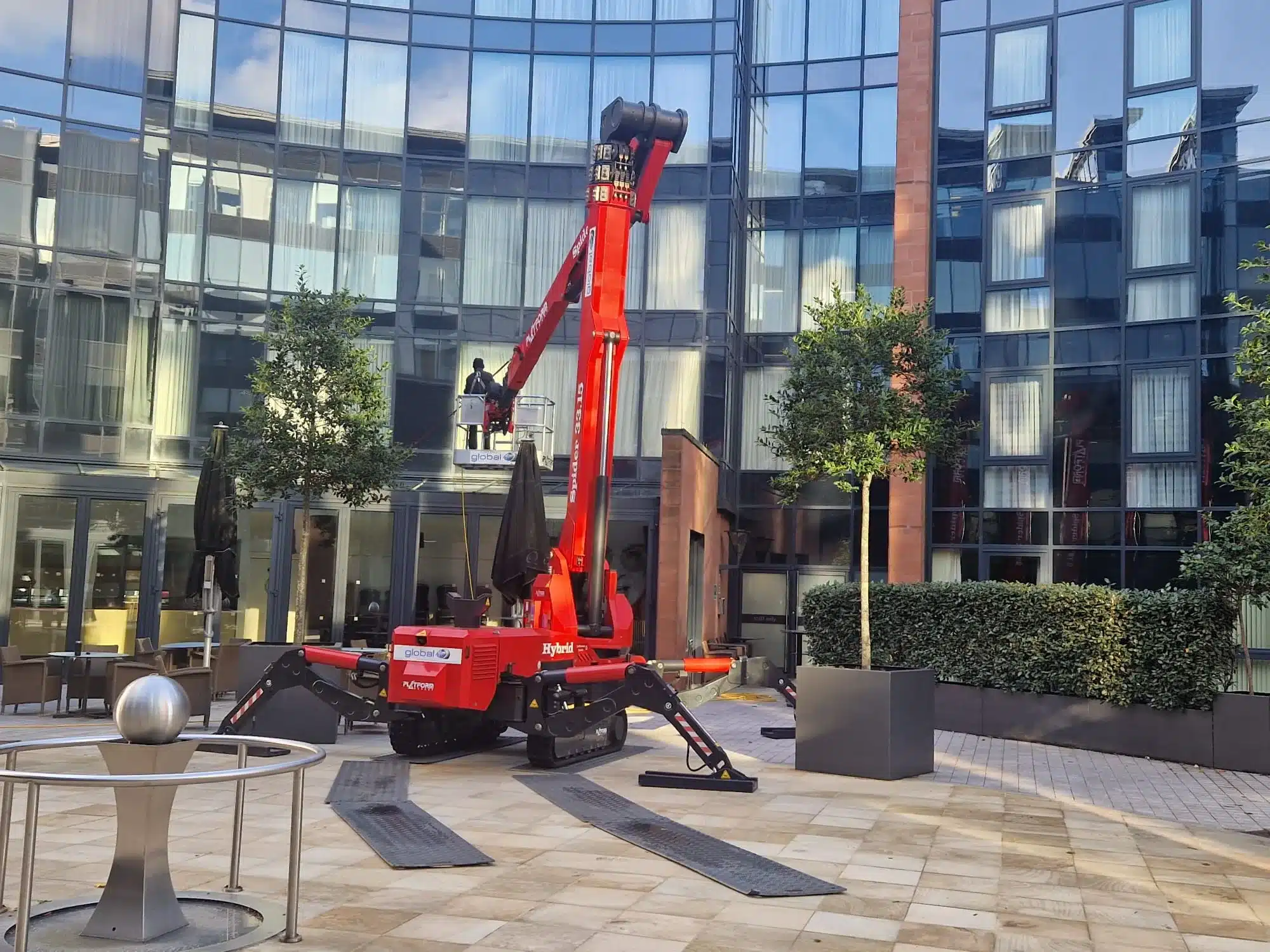
IPAF strongly recommends using suitable spreader pads under outrigger feet whatever the ground looks like. A pad spreads the load from the foot over a larger area, which brings the pressure down to something the ground can carry. It also protects finished surfaces from marking and damage.
The size of pad comes down to two numbers: the maximum outrigger load of the machine, which is shown on the machine and in its manual, and the load the ground can safely take. Divide the first by the second and you get the minimum pad area needed.
Working Indoors and on Suspended Floors
Indoor jobs bring their own questions. Shopping centres, atriums, warehouses and offices often have suspended floors, mezzanines or service voids that were never designed for point loads. Before a spider lift goes onto any floor other than a ground-bearing slab, ask the building owner or their structural engineer for the floor's load capacity and compare it with the machine's outrigger loads. Lighter machines and larger pads can open up options where a heavier machine would not be suitable.
A Simple Pre-Arrival Checklist
Walk the route in
Check every surface the machine will track over, not just the set-up spot. Kerbs, ramps, grass and drain covers all matter.
Ask what is underneath
Check drawings, service plans or the site team's knowledge for cellars, drains and recent excavations.
Check the weather
Heavy rain or a thaw in the days before the job can turn firm ground soft.
Confirm pad sizes
Match spreader pads to the machine's outrigger loads and the ground type. If in doubt, go bigger.
Plan the exclusion zone
Keep vehicles and pedestrians away from the outriggers so nobody drives over the edge of a pad mid-job.
Keep checking
Look at the pads during the job. Any sign of sinking, cracking or movement means stopping and lowering the platform.
How We Help
When you book a tracked spider lift with us, we talk through the site before anything is delivered. Tell us the ground surface, what is underneath and any tight spots on the route, and we will advise on the right machine and pads for the job. If the ground is too uncertain, we will say so and suggest another approach.
Planning a job on tricky ground?
Send us a few photos of the set-up area and we will help you get it right first time.
Sources
IPAF, Guidance on the assessment of ground conditions
BS 8004, Code of practice for foundations (typical allowable bearing values)
Frequently Asked Questions
Why do ground conditions matter so much for spider lifts?
Once set up, a spider lift’s full weight and the load in the basket go down through four outrigger feet. That concentrates a lot of pressure into a small area. If the ground cannot take it, a foot can sink and the machine can tilt.
Do I always need spreader pads under the outriggers?
Yes. IPAF strongly recommends using suitable spreader pads under every outrigger foot whatever the ground looks like. Pads spread the load over a bigger area and also protect finished surfaces.
How do I work out what size spreader pad I need?
Divide the machine’s maximum outrigger load by the load the ground can safely take. That gives the minimum pad area. The outrigger load is shown on the machine and in its manual, and IPAF’s spreader pad calculator is a useful check.
Can a spider lift be set up on block paving or tarmac?
Often, yes, but take care. Block paving laid on sand and tarmac over a weak base can look solid while hiding poor ground or voids. Use correctly sized pads and check what is underneath before setting up.
What hidden hazards should I look for?
Cellars, basements, drains, manholes, inspection chambers, soakaways, recently backfilled trenches, retaining walls and the edges of excavations. These cause more problems than ground that is obviously soft.
Does wet weather affect ground bearing capacity?
Yes. Clay and silt in particular can lose a lot of strength when they are saturated, and frozen ground can look firm then soften as it thaws. Check the forecast and the ground again on the day.
Can a spider lift go on a suspended floor?
Sometimes. Ask the building owner or structural engineer for the floor’s load capacity and compare it with the machine’s outrigger loads. A lighter machine and larger pads can make a job possible where a heavier machine would not be suitable.
Who is responsible for checking ground conditions?
The person or company in control of the site and the work is responsible for making sure the ground is suitable. We are happy to talk through the set-up area and advise when you book.
What should happen if the ground starts to move during a job?
Stop work and lower the platform as soon as it is safe to do so. Do not try to re-level the machine while the boom is raised. Reassess the set-up position, pad sizes and ground before carrying on.
Recent Posts

TG20:21 Compliance Sheets Explained: When Does a Scaffold Need a Design?
What TG20:21 compliance sheets are, when a scaffold needs a specific design instead, and what paperwork to ask your scaffolding contractor for.

Pit Boards and Inspection Pit Safety in Train and Vehicle Depots
Inspection pits are a work at height hazard. How pit boards, edge protection and safe pit access keep depots and workshops safe.

Mobile Access Towers Explained: When a Tower Beats Scaffolding
When a mobile access tower is the right choice, how towers should be built and inspected, and when scaffolding or a spider lift is the better option.
Our Services
Tracked Spiders
Available to rent with a wide range of sizes and specifications
Bespoke Platforms
Available to rent with a wide range of sizes and specifications
Truck Mounts
Available to rent with a wide range of sizes and specifications
Scaffolding
Available to rent with a wide range of sizes and specifications
Let’s work together and create a
safer working environment for all.
Ask for a survey and outline design. We’ll compare temporary, semi-permanent and fixed options, and recommend the most efficient route for your site. You get predictable costs, a shorter programme, and it’s right first time.