

TG20:21 Compliance Sheets Explained: When Does a Scaffold Need a Design?
Trusted by
















Every tube and fitting scaffold on a UK site needs to be shown to be strong and stable. For many scaffolds, that is done with a TG20:21 compliance sheet. For others, a specific design by a competent scaffold designer is needed. Knowing which applies, and what paperwork to ask for, saves time at the start of a job and avoids problems when the principal contractor or an auditor asks to see it.
Key takeaways
- The Work at Height Regulations require strength and stability calculations for every scaffold, unless it follows a generally recognised standard configuration.
- NASC TG20:21 is that standard configuration for tube and fitting scaffolds, shown on site with a compliance sheet.
- Scaffolds outside the scope of TG20 need a specific design from a competent scaffold designer.
- System scaffolds follow the manufacturer's design data, and all scaffolds still need inspecting at least every 7 days.
What the Law Requires
The Work at Height Regulations 2005 say that strength and stability calculations must be carried out for every scaffold, unless it is assembled in conformity with a generally recognised standard configuration. In practice, that gives two routes for tube and fitting scaffolding: build to a recognised standard configuration, or have the scaffold designed.
What TG20:21 Is
TG20 is guidance published by the National Access and Scaffolding Confederation (NASC) that defines a wide range of tube and fitting scaffolds which have already been designed by structural calculation to BS EN 12811. A scaffold built in line with TG20 does not need its own bespoke design. TG20:21 is the current version, with an eGuide, an Operational Guide and a Design Guide.
The eGuide asks for the site location, the scaffold dimensions, the loading and any add-ons such as sheeting, then either produces a compliance sheet or tells you a specific design is needed. TG20:21 extended the range of compliant scaffolds, including compliance sheets for tube and fitting birdcages and mobile towers, and tied independent scaffolds with up to three inside boards.
Sources: NASC TG20:21 and the Work at Height Regulations 2005.
Compliance Sheet or Specific Design?
| Scaffold | Usually covered by | What to ask for |
|---|---|---|
| Standard independent or putlog access scaffold within TG20 limits | TG20:21 compliance sheet | A completed, signed compliance sheet for that scaffold and site |
| Scaffold with heavy loading, loading bays, long spans or unusual ties | Specific design | Design drawings and calculations from a competent scaffold designer |
| Temporary roofs, cantilevers, bridges, very tall or complex structures | Specific design | Design drawings, calculations and a design check |
| System scaffold | Manufacturer's design data or specific design | The manufacturer's guidance, or a design where it falls outside it |

What a Compliance Sheet Should Show
A compliance sheet is not just a generic printout. NASC guidance says the contact details and sign-off sections must identify the specific scaffold, or group of scaffolds, it applies to. That normally includes:
- The contract or job number, client name and site address
- Which scaffold or scaffolds on site it covers
- The maximum dimensions, loading class and tie requirements
- Who produced and checked it, with signatures and the date
The person producing compliance sheets must be competent, with the training and experience to interpret the brief and enter the right information at each stage.
When a Specific Design Is Needed
If the scaffold falls outside TG20, a competent scaffold designer prepares drawings and calculations. NASC's TG21 guidance on commissioning scaffold design explains what information the designer needs in a design brief, how designs should be checked, and how they should be reviewed and approved before the scaffold is built. Typical inputs include the building or structure, the loads the scaffold must carry, how it will be tied or supported, sheeting or netting, and ground conditions.
On Site: Build to the Paperwork, Then Inspect
Erect to the sheet or drawing
The scaffold must match the compliance sheet or design. Changes need checking against the paperwork before they are made.
Hand over properly
A handover confirms the scaffold is complete, what it is designed for and any limits on loading or use.
Inspect at least every 7 days
Scaffolds used for construction must be inspected before first use, after anything that affects stability and at intervals of no more than 7 days, with a written report.
Stop unauthorised changes
Only trained scaffolders should alter a scaffold. Removing ties, boards or guardrails without authorisation is a common cause of incidents.
How We Help
We provide commercial, industrial and domestic scaffolding across the UK, from survey and design through to erection, inspection, maintenance and dismantling. Tell us about the structure and the work, and we will confirm whether your scaffold can be built to TG20 or needs a specific design.
Planning a commercial or industrial scaffold?
Survey, design, erection and inspection, handled by one team.
Frequently Asked Questions
What is TG20:21?
Guidance from the NASC that defines a wide range of tube and fitting scaffolds already designed by structural calculation to BS EN 12811. Scaffolds built to it do not need a bespoke design.
What is a TG20 compliance sheet?
A document produced with the TG20:21 eGuide showing that a specific scaffold follows a recognised standard configuration, including its dimensions, loading and tie requirements.
Does every scaffold need a design?
The law requires strength and stability calculations for every scaffold unless it follows a generally recognised standard configuration, such as TG20 for tube and fitting scaffolds.
When is a specific scaffold design needed?
When the scaffold falls outside TG20, for example with heavy loading, loading bays, long spans, cantilevers, temporary roofs or complex structures.
Who can produce a TG20 compliance sheet?
A competent person with the training and experience to interpret the brief and enter the right information at each stage.
What should a compliance sheet include?
Details identifying the specific scaffold and site, the contract or job number, the maximum dimensions and loading, and who produced and checked it, with signatures and a date.
Does TG20 apply to system scaffolds?
TG20 covers tube and fitting scaffolds. System scaffolds follow the manufacturer’s design data, or need a specific design where they fall outside it.
Who is responsible for the ground under a scaffold?
Designs commonly state that the principal contractor is responsible for what lies below the base plate, so ground conditions need confirming before erection.
Does a TG20 scaffold still need inspecting?
Yes. Scaffolds used for construction must be inspected before first use, after anything that affects stability and at least every 7 days.
Recent Posts

Pit Boards and Inspection Pit Safety in Train and Vehicle Depots
Inspection pits are a work at height hazard. How pit boards, edge protection and safe pit access keep depots and workshops safe.

Mobile Access Towers Explained: When a Tower Beats Scaffolding
When a mobile access tower is the right choice, how towers should be built and inspected, and when scaffolding or a spider lift is the better option.
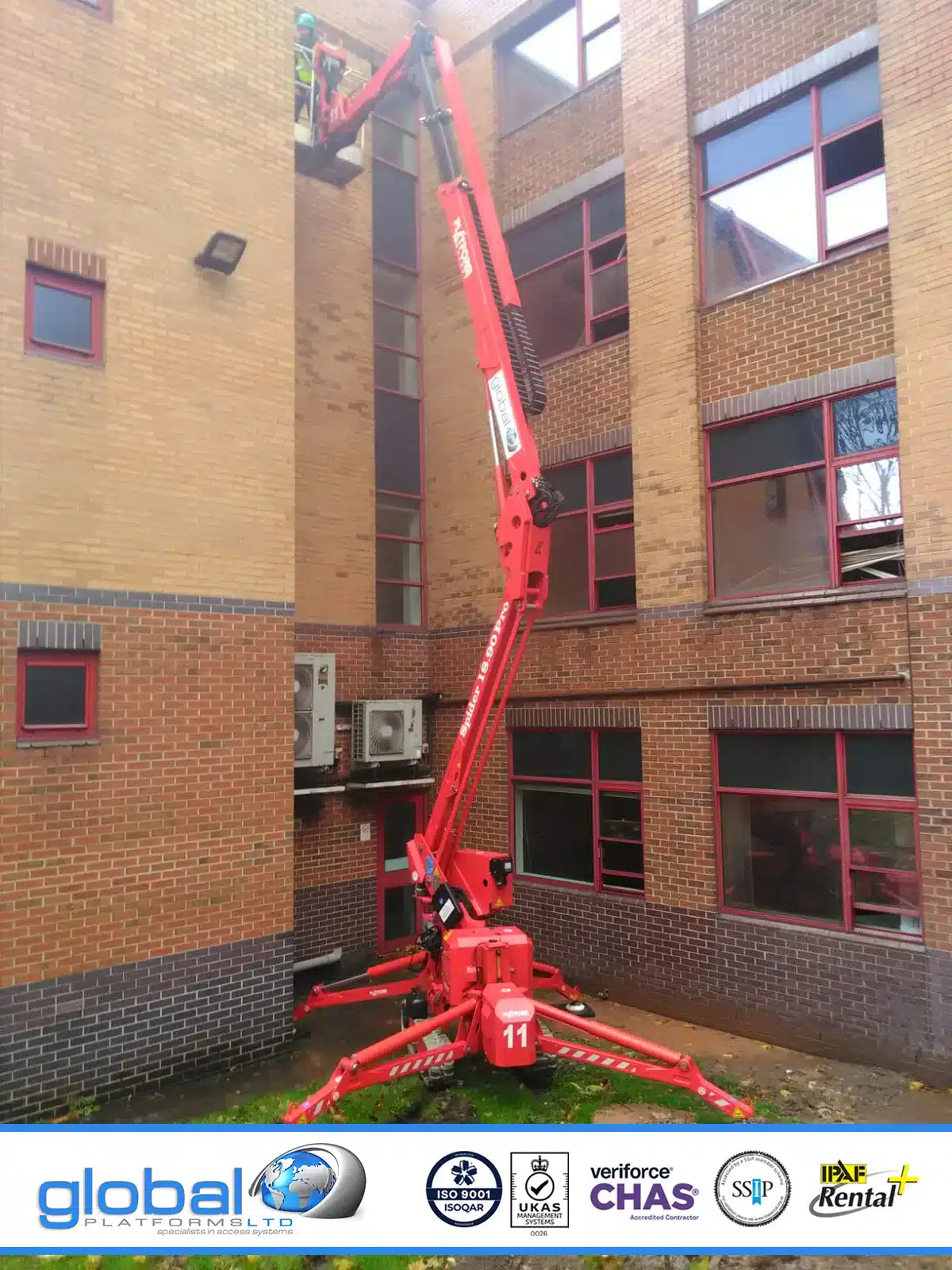
Ground Conditions for Spider Lifts: What to Check Before the Machine Arrives
Outriggers put a lot of pressure on a small area. Here is how to check the ground before a tracked spider lift arrives, including spreader pads, hidden voids and a simple checklist.
Our Services
Tracked Spiders
Available to rent with a wide range of sizes and specifications
Bespoke Platforms
Available to rent with a wide range of sizes and specifications
Truck Mounts
Available to rent with a wide range of sizes and specifications
Scaffolding
Available to rent with a wide range of sizes and specifications
Let’s work together and create a
safer working environment for all.
Ask for a survey and outline design. We’ll compare temporary, semi-permanent and fixed options, and recommend the most efficient route for your site. You get predictable costs, a shorter programme, and it’s right first time.