

Work at Height Regulations 2005: A Practical Guide to Choosing the Right Access
Trusted by
















Falls from height are still the biggest single cause of workplace deaths in Great Britain. The Work at Height Regulations 2005 set out what every employer, facilities manager and site lead has to do about it. This guide explains the rules in plain English, then shows how they shape the choice between a bespoke platform, a tracked spider MEWP and scaffolding.
Key takeaways
- The regulations apply to any work where a fall could cause injury, at any height and including below ground level, such as inspection pits.
- You must follow a set order: avoid work at height, prevent falls, then minimise the distance and consequences of any fall.
- Collective protection such as guardrails and platforms always takes priority over personal protection such as harnesses.
- Scaffolds and working platforms used for construction need inspecting before first use and at least every 7 days. MEWPs need a thorough examination at least every 6 months.
- The right equipment depends on how often the task happens, how long it lasts and how much space you have.
Why the Regulations Still Matter
The latest HSE figures show that falls from height caused 31 of the 126 worker deaths recorded in Great Britain in 2025/26. That is roughly one in four, and it has been the leading cause of fatal injury at work for many years.
Source: HSE, Work-related fatal injuries in Great Britain, 2025/26 (provisional figures).
What Counts as Work at Height
Work at height means work in any place where a person could fall a distance liable to cause personal injury if no precautions were taken. There is no minimum height. That covers obvious jobs such as roof repairs and façade work, but it also covers places people often overlook:
- Working on top of a vehicle, aircraft wing or train roof during maintenance
- Working next to an open inspection pit or an opening in a floor
- Getting on and off a loading bay, mezzanine or fixed walkway
- Using a stepladder to change a light fitting in a warehouse or shopping centre
Moving to and from the place of work counts too. If the route up to a platform is unsafe, the job is not compliant, however good the platform is.
The Hierarchy: Avoid, Prevent, Minimise
The regulations do not let you start with whatever equipment happens to be in the yard. Duty holders have to work through a set order of control measures, and only move down a step when the one above is not reasonably practicable.
Avoid work at height
Can the task be done from the ground? Long-reach tools, lowering a fitting on a winch or assembling a component at ground level and lifting it into place all remove the risk completely.
Prevent falls
Where work at height cannot be avoided, use an existing safe place of work or equipment that stops a fall happening. A platform with guardrails, a MEWP basket or a properly erected scaffold all fall into this category.
Minimise the distance and consequences
If the risk of a fall remains, use equipment that limits how far someone could fall and how badly they could be hurt, such as safety nets, airbags or fall arrest systems.
Planning, Supervision and Competence
Every job at height must be properly planned, appropriately supervised and carried out in a way that is as safe as reasonably practicable. That includes thinking about the weather, emergency procedures and how someone would be rescued if they were left suspended or stranded at height.
Anyone involved, including the people who plan and organise the work, must be competent. For powered access, that usually means an operator trained in the right IPAF category for the machine. For scaffolding, it means trained and carded scaffolders erecting and altering the structure.
Choosing the Right Equipment for the Task
Once you know you need to work at height, the hierarchy points you towards collective protection. The question is which type. In our experience, three things decide it: how often the task happens, how long each visit lasts and how much space there is around the work.
| Situation | Usually the best fit | Why |
|---|---|---|
| The same task, in the same place, every day or every week | Bespoke access platform | Designed around the vehicle, aircraft or train, with handrails, gates and anti-slip decking built in. No set-up time, no reliance on harnesses. |
| Short visits to height in tight, indoor or hard-to-reach spaces | Tracked spider MEWP | Many models fit through standard doorways and garden gates, they are light on floors, and they set up quickly for a day or a week. |
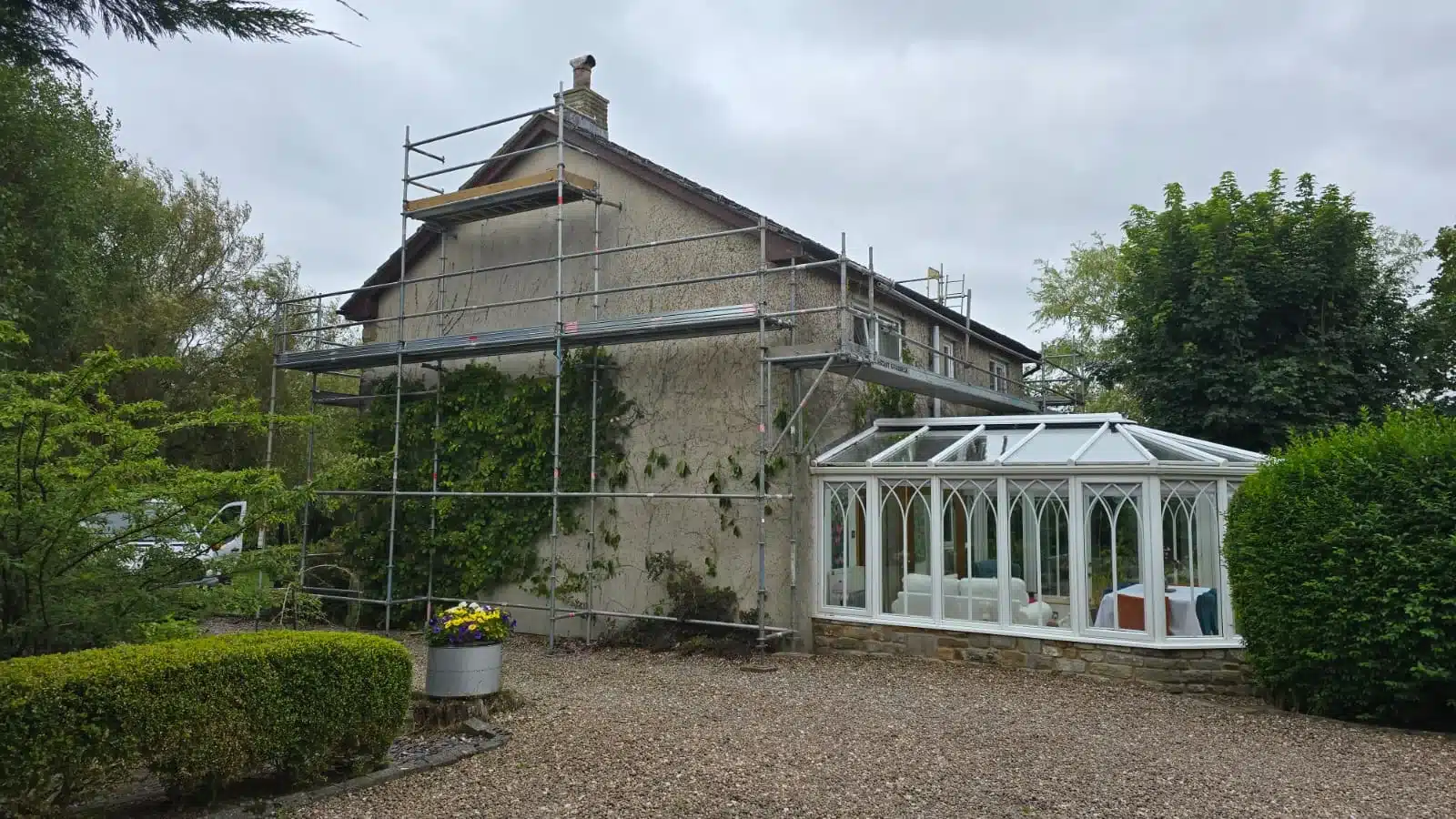
| Long-duration work across a whole elevation or building | Scaffolding | A fixed working platform that several trades can use at once over weeks or months. |
| A one-off job where the access route is unclear | Site survey first | Ground conditions, overhead obstructions and access widths often decide the answer before anything else. |
Inspection Rules You Need to Know
The regulations, alongside other workplace law, set clear expectations for inspecting access equipment. The main ones are:
Scaffolds and working platforms
Where a scaffold or working platform is used for construction work and someone could fall 2 metres or more, it must be inspected before it is used for the first time, after anything that could affect its stability (such as high winds or a vehicle strike) and at intervals of no more than 7 days. Each inspection needs a written report containing the details listed in Schedule 7 of the regulations.
MEWPs
Because a MEWP lifts people, the Lifting Operations and Lifting Equipment Regulations 1998 (LOLER) require a thorough examination by a competent person at least every 6 months, unless an examination scheme says otherwise. Operators should also carry out pre-use checks every day. When you hire a machine from us, we provide the current report of thorough examination with it.
Bespoke and fixed platforms
Platforms that stay in use for years are work equipment, so they need inspecting at suitable intervals to catch wear, damage and loose fixings before they become a problem. Our inspection service covers this, with written records you can show an auditor.
How We Help
We work across the UK from our base in Warrington, and we cover all three types of access under one roof. That means we have no reason to push one answer over another. We look at the task, the space and how often the work happens, then recommend the safest practical option, whether that is a platform designed and built for your site, a tracked spider MEWP on self-drive or operated hire, or scaffolding erected and inspected for you.
Not sure which access suits your job?
Tell us what needs doing and where. We will come back with a clear recommendation.
Frequently Asked Questions
Who do the Work at Height Regulations 2005 apply to?
They apply to employers, the self-employed and anyone who controls work at height carried out by other people, such as facilities managers, building owners and contractors. If you organise, plan or carry out work at height, the regulations apply to you.
Is there a minimum height at which the regulations apply?
No. The regulations apply wherever a person could fall a distance liable to cause injury. There is no minimum height, so a short drop from a vehicle roof or loading bay is covered just as much as work on a tall building.
Do the regulations cover inspection pits and openings below ground level?
Yes. Work at height includes places at or below ground level where someone could fall, such as inspection pits in rail and vehicle depots or openings in a floor. Pit edge protection and pit boards are common ways to control this.
What is the hierarchy of control for work at height?
Avoid work at height where you can. Where you cannot, use equipment or measures that prevent a fall. Where a risk of falling remains, use measures that minimise the distance and consequences of a fall. At each stage, collective protection takes priority over personal protection.
What is the difference between collective and personal fall protection?
Collective protection, such as guardrails, platforms and edge protection, protects everyone without them having to do anything. Personal protection, such as a harness and lanyard, only protects the person wearing it and relies on it being used correctly. The regulations require collective measures to be chosen first.
Are ladders banned under the regulations?
No. Ladders and stepladders can be used where a risk assessment shows the work is low risk and short duration, or where features of the site mean other equipment is not practical. For regular or longer tasks, a platform or MEWP is usually the safer choice.
How often does a scaffold need to be inspected?
A scaffold used for construction work, where someone could fall 2 metres or more, must be inspected before first use, after anything that could affect its stability and at intervals of no more than 7 days. Each inspection needs a written report.
How often does a MEWP need a thorough examination?
Because MEWPs lift people, LOLER requires a thorough examination by a competent person at least every 6 months, unless a written examination scheme sets a different interval. Operators should also carry out pre-use checks each day.
Do bespoke access platforms need inspecting?
Yes. A fixed or mobile bespoke platform is work equipment, so it should be inspected at suitable intervals to pick up wear, damage or loose fixings. We offer an inspection service with written records for audits.
Recent Posts

Vehicle Access Platforms by Vehicle Type: HGVs, Buses, Refuse and Emergency Fleets
HGV cab roofs, bus roof equipment, refuse hoppers and fire appliances each need different access. We explain how we match the platform to the vehicle.
Train Inspection Staging for Rail Depots with Tight Clearances
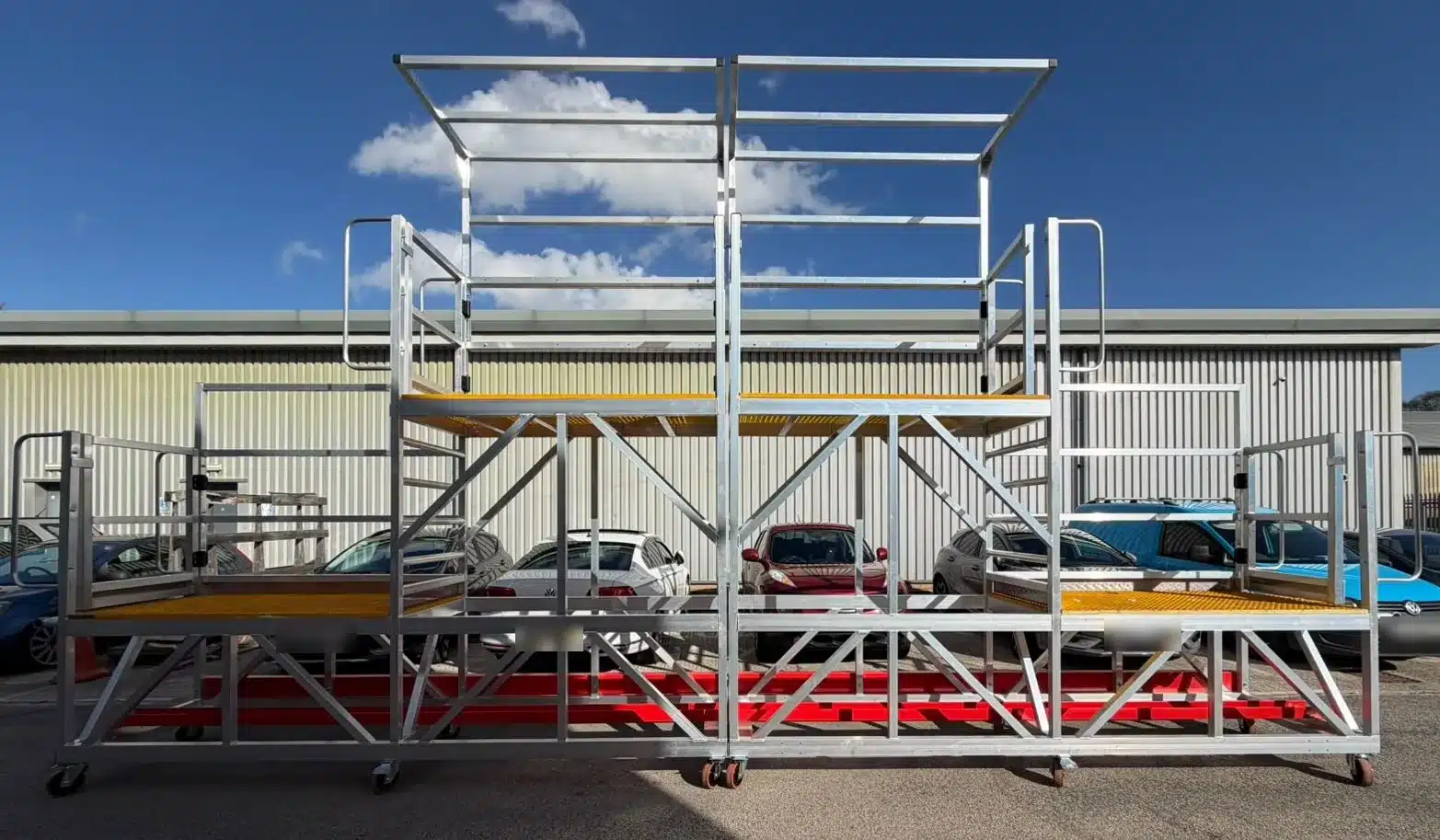
How we designed inspection staging for a rail depot with about a metre between the roads, and what it means for your next bespoke platform.
Aircraft Assembly Staging: Reaching Alignment Points Under a Continuous Deck
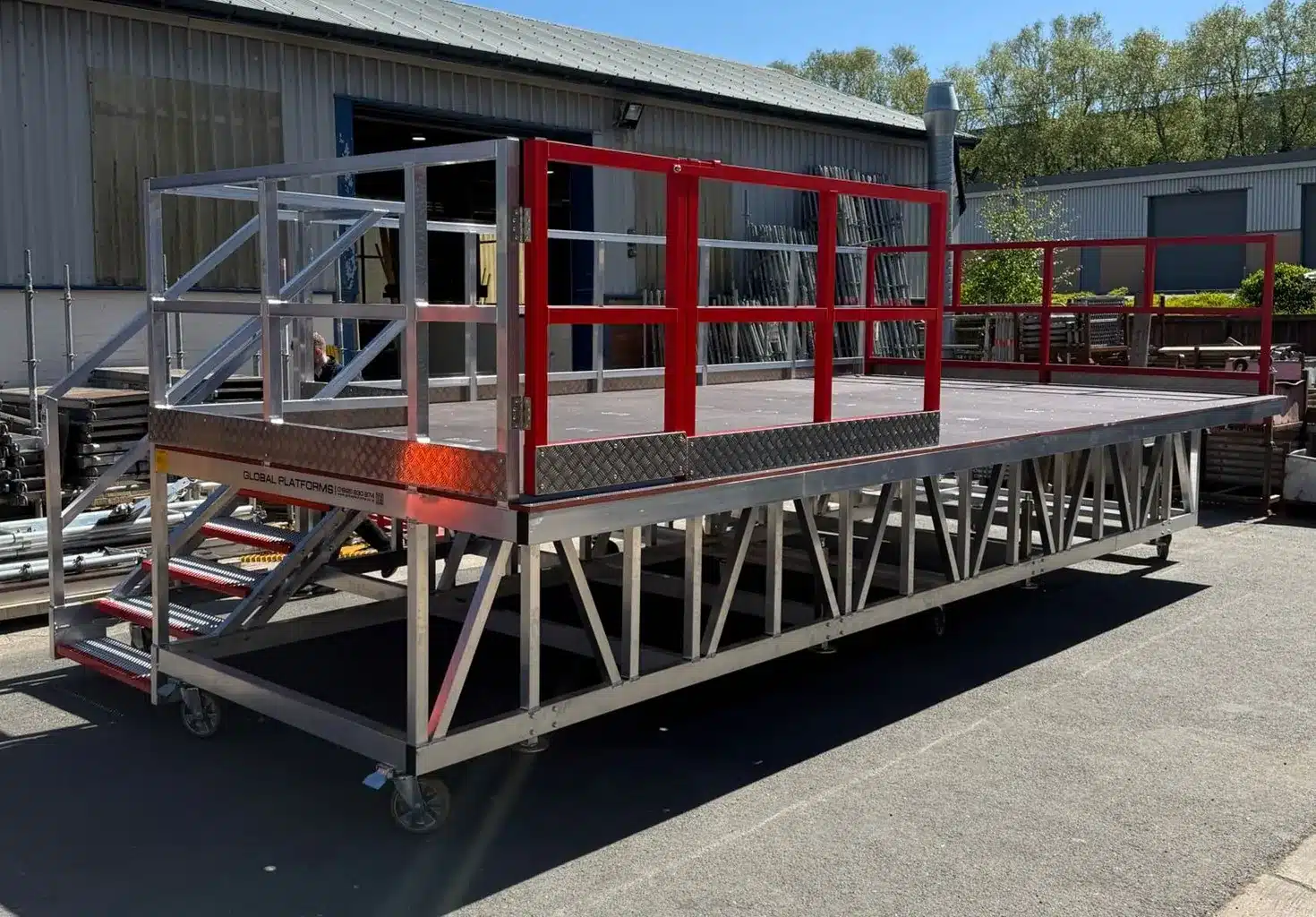
How lift-out panels, a 3D clash check and a BS EN 131 redesign shaped bespoke aircraft assembly staging for a UK defence aerospace programme.
Our Services
Tracked Spiders
Available to rent with a wide range of sizes and specifications
Bespoke Platforms
Available to rent with a wide range of sizes and specifications
Truck Mounts
Available to rent with a wide range of sizes and specifications
Scaffolding
Available to rent with a wide range of sizes and specifications
Let’s work together and create a
safer working environment for all.
Ask for a survey and outline design. We’ll compare temporary, semi-permanent and fixed options, and recommend the most efficient route for your site. You get predictable costs, a shorter programme, and it’s right first time.