

Vehicle Access Platforms by Vehicle Type: HGVs, Buses, Refuse and Emergency Fleets
Trusted by
















A bus roof, a heavy goods vehicle (HGV) cab and a refuse truck hopper all mean working at height, but they do not need the same platform. The vehicle sets the height, the reach and the risks, so we design the access around it. This guide sets out what changes from one vehicle type to the next, and what we need from you to specify the right platform.
Key takeaways
- Working on top of a vehicle is work at height under the Work at Height Regulations 2005. There is no minimum height.
- HGV work is split across the cab roof and the trailer front, so the platform needs two levels.
- Bus and coach work is on the roof, so continuous roof and side access matters most.
- The bay decides the material: aluminium for mobile indoor use, GRP or galvanised steel for wash-down and outdoor areas.
Why the Vehicle Type Decides the Platform
A tower moved from bay to bay, or a ladder against a cab, slows the job and leaves the technician exposed. A platform built for the vehicle puts them at the correct working height, in a fully guarded work area. What that platform looks like depends on the vehicle in the bay.
| Vehicle type | Typical tasks | What the platform needs |
|---|---|---|
| HGVs, lorries and trailers | Windscreens, roof fairings, marker lamps, beacons, trailer fronts | Two deck levels with a walk-through over the fifth wheel |
| Buses and coaches | HVAC units, pantographs, battery trays, solar panels | Continuous access along the roof and side panels |
| Refuse and utility vehicles | Hoppers, bin-lifting arms, booms, body panels | Wash-down resistant materials and a wide, stable base |
| Fire engines and emergency vehicles | Pumps, ladder racks, beacons and light bars, aerial appliances | Quick positioning in tight appliance bays |
| Motorhomes and caravans | Roof and body work on high-value finishes | Padded frames and non-marking feet |
HGVs, Lorries and Trailers
The work on a tractor unit and trailer is split across two levels: the cab roof and the front of the trailer. Our CabMate dual-height platform puts technicians at both, with a secure walk-through over the fifth wheel, so they move between the two without climbing down.
It suits windscreen, roof fairing, marker lamp, beacon and trailer front work during routine inspections, MOT preparation and defect rectification.
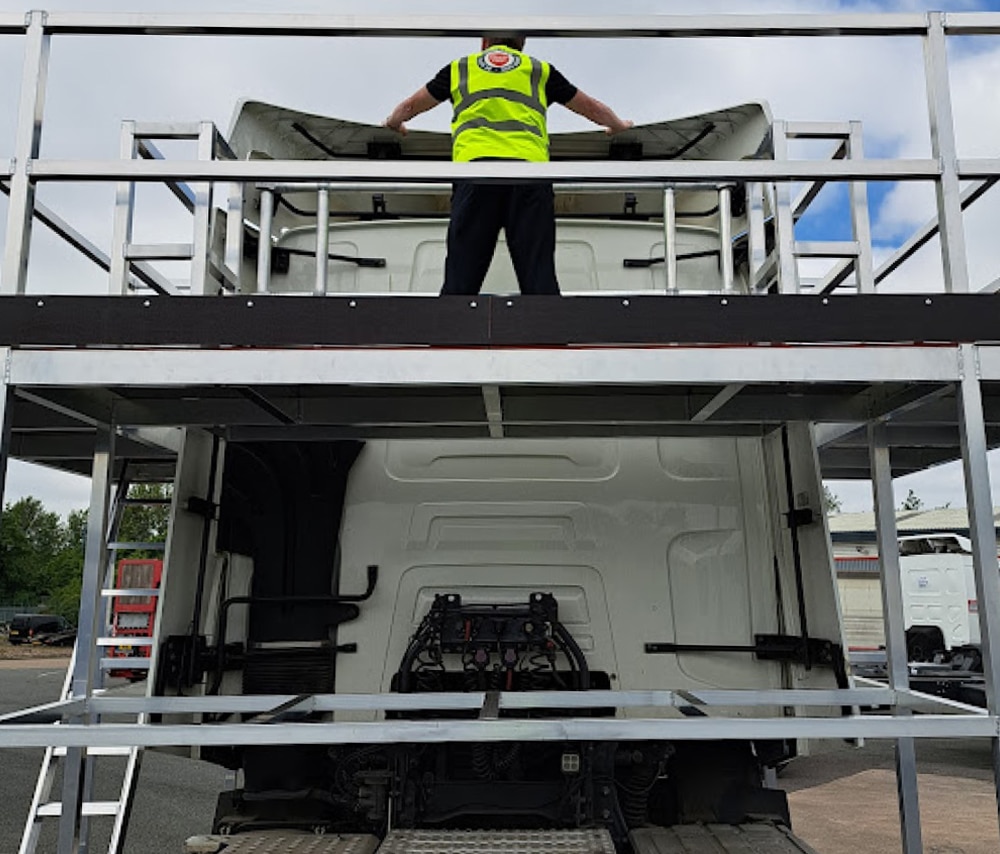
- Dual-level decks for cab and trailer, with quick height adjustment
- Safe walk-through access over the fifth wheel coupling
- Slip-resistant surfaces, toe-boards and guardrails throughout
- Mobile or fixed configurations
Buses and Coaches
On passenger fleets, the roof carries the equipment: heating, ventilation and air conditioning (HVAC) units, pantographs, battery trays and solar panels. We build continuous access along the roof and side panels, so the work does not depend on repeated tower moves. Lightweight aluminium keeps the platform easy to move between bays.

- Continuous roof and side access, with fewer climbs and less repositioning
- Slip-resistant decks, gated landings and high-visibility edges
- Mobile and modular designs for busy or confined depots
Refuse and Utility Vehicles
Refuse, recycling and utility fleets work in harsh conditions on tight turnarounds. Our platforms give access around hoppers, bin-lifting arms, booms, body panels and roof equipment. Where a platform faces frequent wash-downs or lives outdoors, we build in glass-fibre reinforced plastic (GRP) or galvanised steel, on a wide, stable base with lockable castors.

Fire Engines and Emergency Vehicles
Appliance bays are tight and emergency fleets cannot sit off the road for long. Our platforms position crews for pump access, ladder rack servicing, beacon and light bar fitting, aerial appliance work and roof equipment maintenance. Heavy-duty locking castors allow quick, precise positioning, and vehicle-specific adaptations deal with unusual fittings and heights.
Motorhomes and Caravans
High-value finishes need access that leaves no marks. We use padded aluminium frames, non-marking feet and floor load spreaders, with adjustable working heights and compact footprints for narrow aisles and doorways.
Mobile or Fixed
Most vehicle platforms can be built mobile or fixed. A mobile unit on locking castors suits shared bays and mixed fleets. A fixed platform suits a dedicated bay that sees the same vehicle type every day. We confirm which fits at survey, along with floor loading and access widths.
Materials That Match the Bay
- Aluminium: lightweight and corrosion-resistant, for mobile indoor use
- GRP: non-conductive and easy to clean, for utilities and wash-down areas
- Coated steel: strong and durable, for heavy-duty and outdoor use
Standards and Documents
We design and manufacture vehicle access platforms in line with BS EN ISO 14122, BS EN 131 and EN 14183, applied alongside the Work at Height Regulations 2005. Our guide to bespoke platform compliance explains what each standard covers.
Every platform is handed over with computer-aided design (CAD) drawings and load calculations, site-specific risk assessments and method statements (RAMS), a user manual with QR code access, handover tags and a defined inspection schedule. Familiarisation training is available on request.
How We Deliver a Vehicle Access Platform
Survey and concept
We review photos and drawings, then capture the key dimensions and constraints in the bay.
Detail design
Clash-checked 3D models go to you for approval before manufacture.
Fabricate and pre-assemble
Serialised components with full quality documentation, trial fitted where practical.
Install, handover and aftercare
A tidy installation with floor protection, tags and training, followed by re-inspections, spares and modifications.
How We Help
We design, fabricate and install bespoke vehicle access platforms under our ISO 9001 quality management system. We survey before we quote, so the platform fits the bay and the fleet. Our vehicle access platforms page shows the full range.
Access built around your fleet
Tell us the vehicles and the tasks, and we will survey the bay.
Frequently Asked Questions
Does working on a vehicle roof count as work at height?
Yes. The Work at Height Regulations 2005 apply wherever a person could fall a distance liable to cause injury. There is no minimum height, so a cab roof or trailer top is covered.
What is a dual-height HGV access platform?
It is a platform with decks at two levels, one for the cab roof and one for the front of the trailer. Ours includes a walk-through over the fifth wheel, so technicians move between the two levels without climbing down.
Can one platform serve more than one vehicle type?
Often, yes. Adjustable deck heights and modular designs are available, so a platform can be set up for different vehicles. We confirm what is practical at survey, because cab heights and roof equipment vary.
Should a vehicle access platform be mobile or fixed?
Mobile platforms on locking castors suit shared bays and mixed fleets. Fixed platforms suit a dedicated bay for one vehicle type. We recommend one or the other after seeing the bay.
Which material suits a wash-down bay or an outdoor yard?
GRP or galvanised steel. Both stand up to frequent wash-downs and outdoor exposure. Aluminium suits mobile platforms used indoors.
Will a platform mark the vehicle bodywork?
Platforms can be fitted with protective pads and proximity bumpers, and our motorhome and caravan platforms use padded frames.
What standards do vehicle access platforms follow?
We design in line with BS EN ISO 14122, BS EN 131 and EN 14183, applied alongside the Work at Height Regulations 2005.
What documents come with the platform?
CAD drawings and load calculations, site-specific RAMS, a user manual with QR code access, handover tags and a defined inspection schedule.
How is the platform inspected after handover?
Each platform comes with a defined inspection schedule, with the Lifting Operations and Lifting Equipment Regulations 1998 (LOLER) and the Provision and Use of Work Equipment Regulations 1998 (PUWER) applied where relevant. We also carry out access equipment inspections.
Do you supply platforms outside the North West?
Yes. We are based in Warrington and deliver bespoke platforms across the UK.
Recent Posts
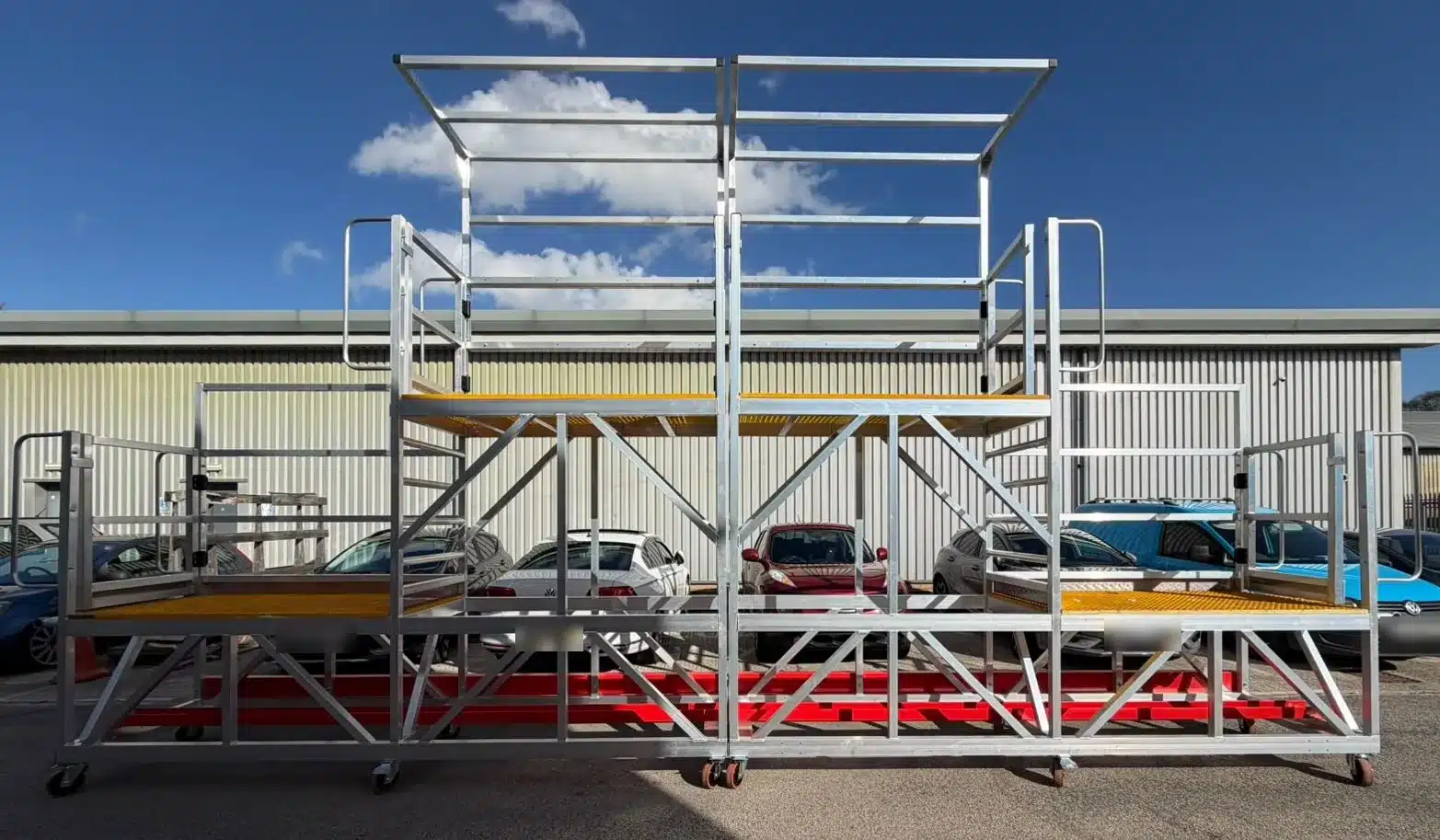
Train Inspection Staging for Rail Depots with Tight Clearances
How we designed inspection staging for a rail depot with about a metre between the roads, and what it means for your next bespoke platform.
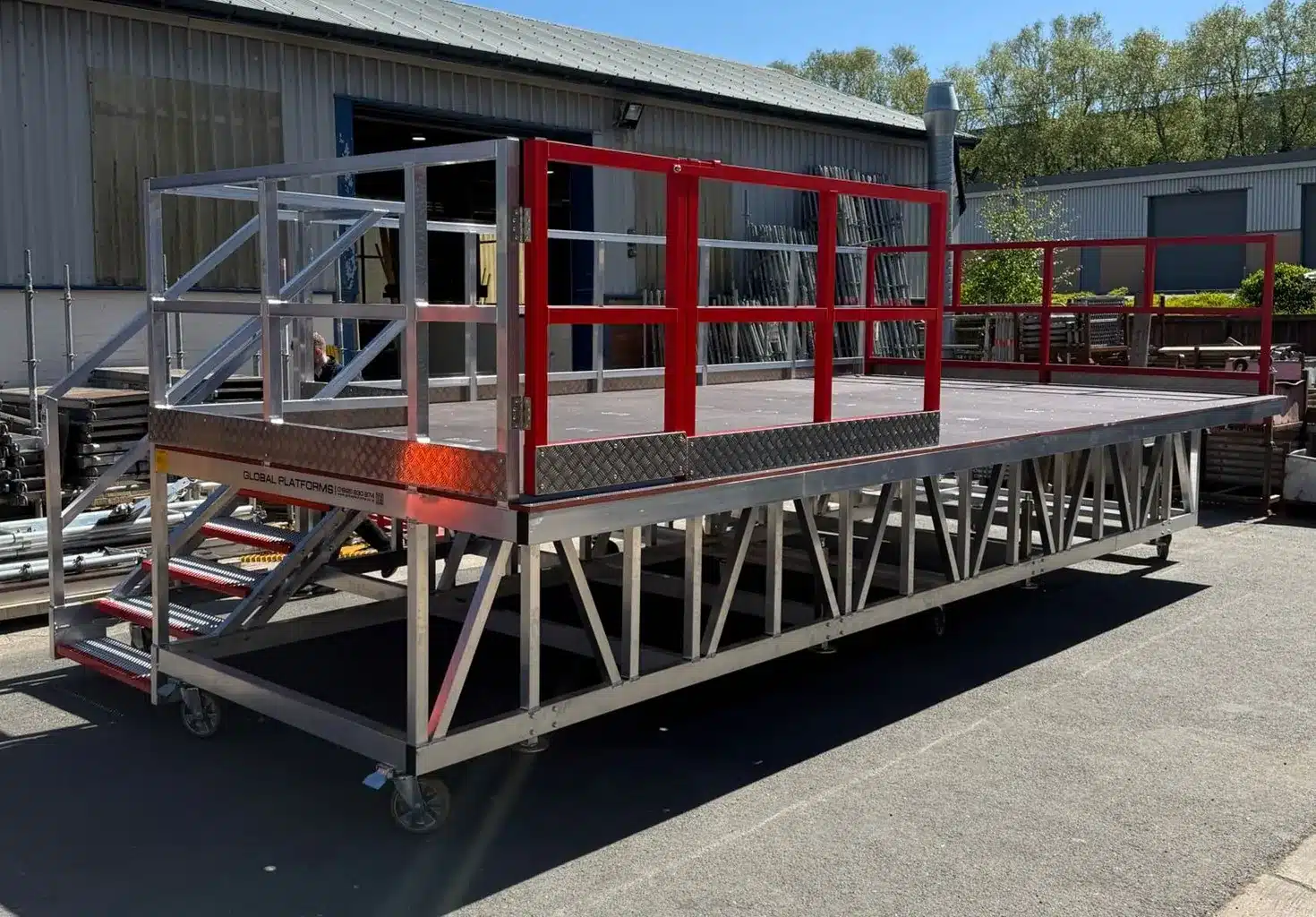
Aircraft Assembly Staging: Reaching Alignment Points Under a Continuous Deck
How lift-out panels, a 3D clash check and a BS EN 131 redesign shaped bespoke aircraft assembly staging for a UK defence aerospace programme.
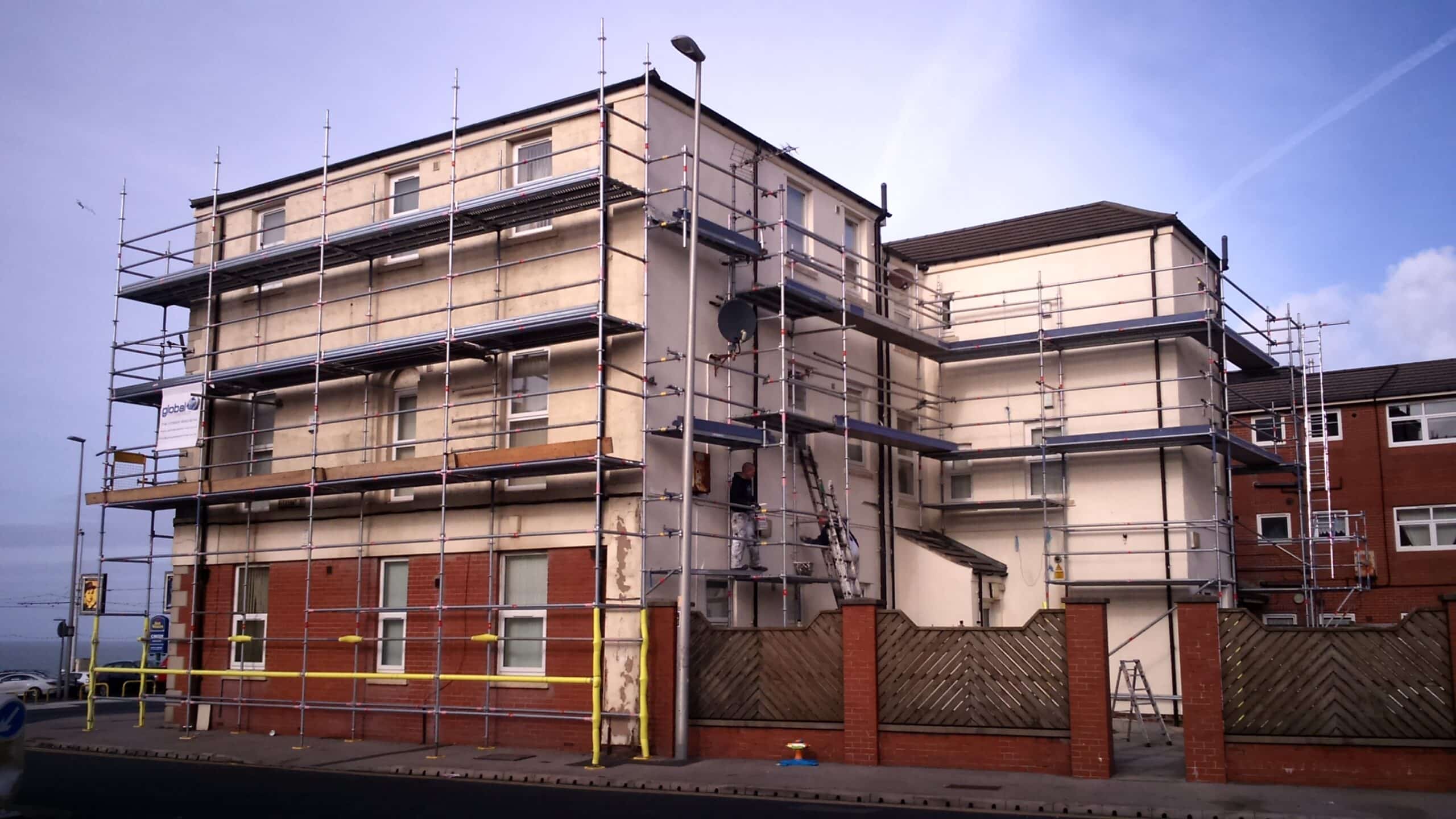
TG20:21 Compliance Sheets Explained: When Does a Scaffold Need a Design?
What TG20:21 compliance sheets are, when a scaffold needs a specific design instead, and what paperwork to ask your scaffolding contractor for.
Our Services
Tracked Spiders
Available to rent with a wide range of sizes and specifications
Bespoke Platforms
Available to rent with a wide range of sizes and specifications
Truck Mounts
Available to rent with a wide range of sizes and specifications
Scaffolding
Available to rent with a wide range of sizes and specifications
Let’s work together and create a
safer working environment for all.
Ask for a survey and outline design. We’ll compare temporary, semi-permanent and fixed options, and recommend the most efficient route for your site. You get predictable costs, a shorter programme, and it’s right first time.