

Pit Boards and Inspection Pit Safety in Train and Vehicle Depots
Trusted by
















Inspection pits are one of the most common work at height hazards in train depots, bus garages and vehicle workshops, and one of the most overlooked because they sit below floor level. A fall into a pit is treated as a fall from height, and the injuries can be serious. Pit boards, pit edge protection and safe pit access are how depots keep the benefits of a pit without the risk.
Key takeaways
- The Work at Height Regulations cover places below ground level, so open inspection pits are a work at height hazard.
- Pit boards span the pit to give a safe walkway or working deck, and can include handrails and access ladders.
- Barriers, covers and controlled access protect unused pits and pit edges.
- Improvised boards and planks are a common cause of problems. Purpose-made, load-rated boards are the safer choice.
Why Inspection Pits Are a Work at Height Risk
The Work at Height Regulations 2005 apply to any place where a person could fall a distance liable to cause injury, including places at or below ground level. An open pit in a depot or workshop meets that test easily. People walking between vehicles, stepping off rolling stock or working at track level next to an open pit can all fall in, and tools and parts can fall onto people working below.
HSE has taken action against businesses that left pits without physical measures such as barriers or covers in place, and its guidance makes clear that basic safeguards prevent serious injuries.
What Pit Boards Do
A pit board is a load-rated deck that spans an inspection pit or the gap between raised rails. Depending on the design, it can:
- Give a safe walkway across a pit at floor level, so people do not step over or around open edges
- Provide a working deck alongside a train or vehicle, at floor level or raised closer to the work
- Close off a section of pit that is not in use while the rest stays open for work underneath
- Combine with access ladders or steps and handrails to make a complete, guarded system

Choosing the Right Type of Pit Board
| Option | Typical use | Things to consider |
|---|---|---|
| GRP pit boards | Floor-level walkways and covers, wet or electrified environments | Lightweight, non-conductive and corrosion resistant. Check load rating and grip. |
| Aluminium pit boards | Movable decks and working platforms | Light enough to reposition, strong for their weight. Grating gives good grip in oily conditions. |
| Adjustable pit boards | Depots with different pit or rail widths | Telescopic or adjustable widths let one design fit several roads. |
| Complete pit systems | Regular access into and across pits | Boards, ladders or steps and handrails designed together around the depot layout. |
Protecting Pit Edges and Unused Pits
Pit boards are only part of the picture. A good pit safety plan usually combines several measures:
Control who goes near the pit
Restrict access to the pit area to people who need to be there, with clear marking on the floor around pit edges.
Guard the edges
Use guardrails, chains or retractable barriers around sections of pit that are open but not covered by a vehicle.
Cover unused pits
Fit covers or pit boards over pits that are not in use, so the floor can be used normally and safely.
Provide safe access in and out
Fixed steps or purpose-made pit ladders give safer access than climbing in over the edge.
Inspect and maintain
Check boards, barriers and ladders for damage, wear and missing parts, and take defective equipment out of use.
Designing Pit Boards Around Your Depot
Every depot is different. Pit widths, rail heights, the fleets being maintained and the tasks carried out all affect the right design. That is why we survey first, then design boards, ladders and handrails around your roads and your working practices. Our rail access range includes secure, load-rated pit boards in customisable widths and lengths, and complete systems with access ladders and handrails.
How We Help
We design, fabricate and install bespoke access for rail, bus and vehicle maintenance across the UK, from pit boards and pit access steps to full-length train maintenance platforms. Tell us about your depot and we will arrange a survey.
Improving pit safety at your depot?
We design pit boards, steps and platforms around your roads and fleet.
Frequently Asked Questions
Is a fall into an inspection pit a fall from height?
Yes. The Work at Height Regulations cover places at or below ground level where a person could fall a distance liable to cause injury, which includes inspection pits.
What is a pit board?
A load-rated deck that spans an inspection pit or the gap between raised rails, giving a safe walkway or working deck across or beside the pit.
What are pit boards made from?
Commonly GRP or aluminium. GRP is lightweight, non-conductive and corrosion resistant, while aluminium is light to move and strong for its weight.
Can pit boards be adjusted for different pit widths?
Yes. Adjustable or telescopic designs can fit several pit or rail widths, which suits depots with different roads.
Are loose planks acceptable over a pit?
No. Improvised boards can slip, flex or break and create trip edges. Purpose-made, load-rated boards that locate securely are the safer choice.
How should unused pits be protected?
Cover them with pit boards or covers, or guard the edges with barriers, so the floor can be used safely.
What about access into the pit?
Fixed steps or purpose-made pit ladders give safer access than climbing in over the edge.
Do pit boards need inspecting?
Yes. Check boards, barriers and ladders regularly for damage, wear and missing parts, and take defective equipment out of use.
Can you design pit boards for our depot?
Yes. We survey the depot, then design pit boards, ladders and handrails around your pit widths, rail heights and fleet.
Recent Posts

Vehicle Access Platforms by Vehicle Type: HGVs, Buses, Refuse and Emergency Fleets
HGV cab roofs, bus roof equipment, refuse hoppers and fire appliances each need different access. We explain how we match the platform to the vehicle.
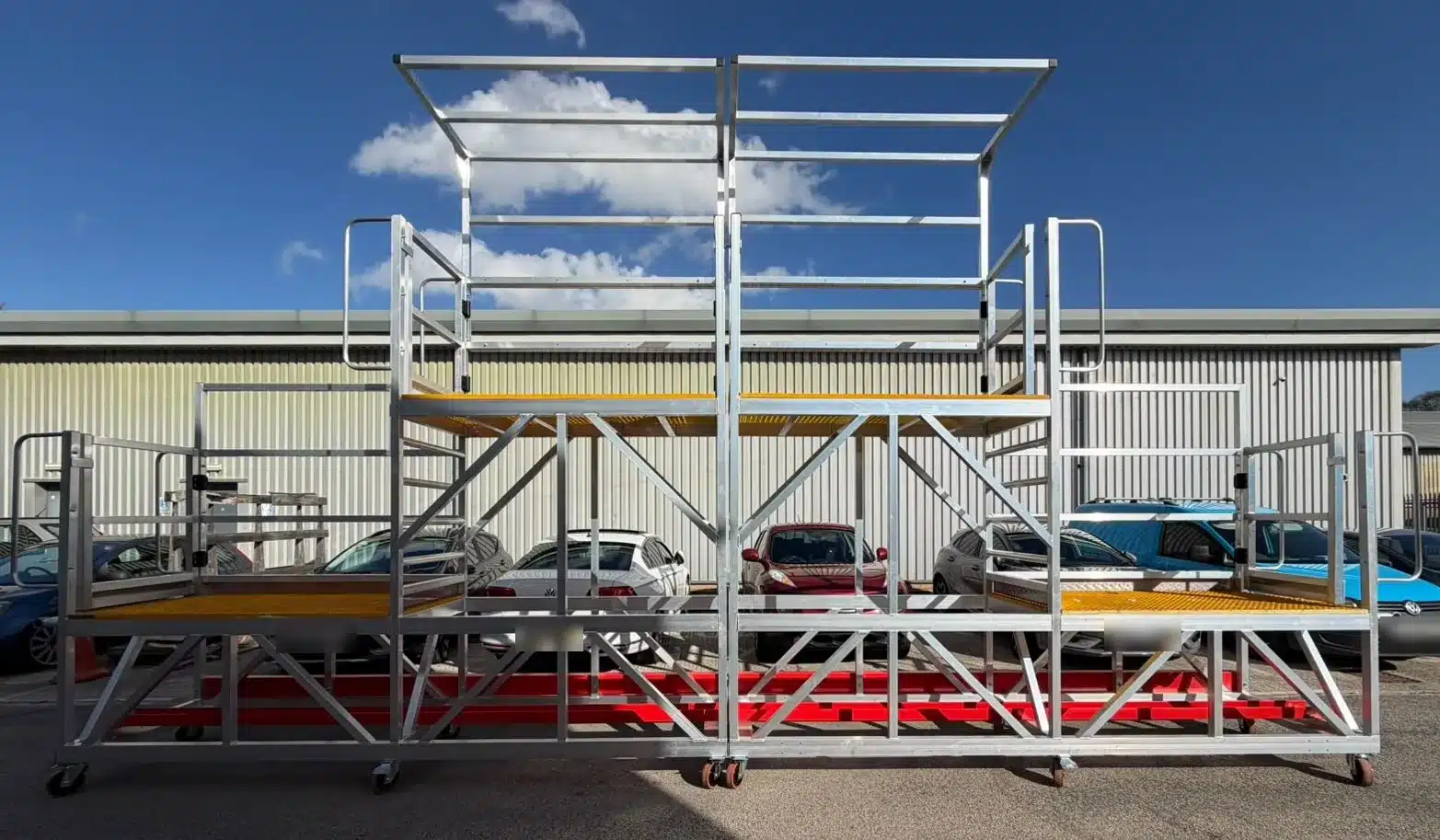
Train Inspection Staging for Rail Depots with Tight Clearances
How we designed inspection staging for a rail depot with about a metre between the roads, and what it means for your next bespoke platform.
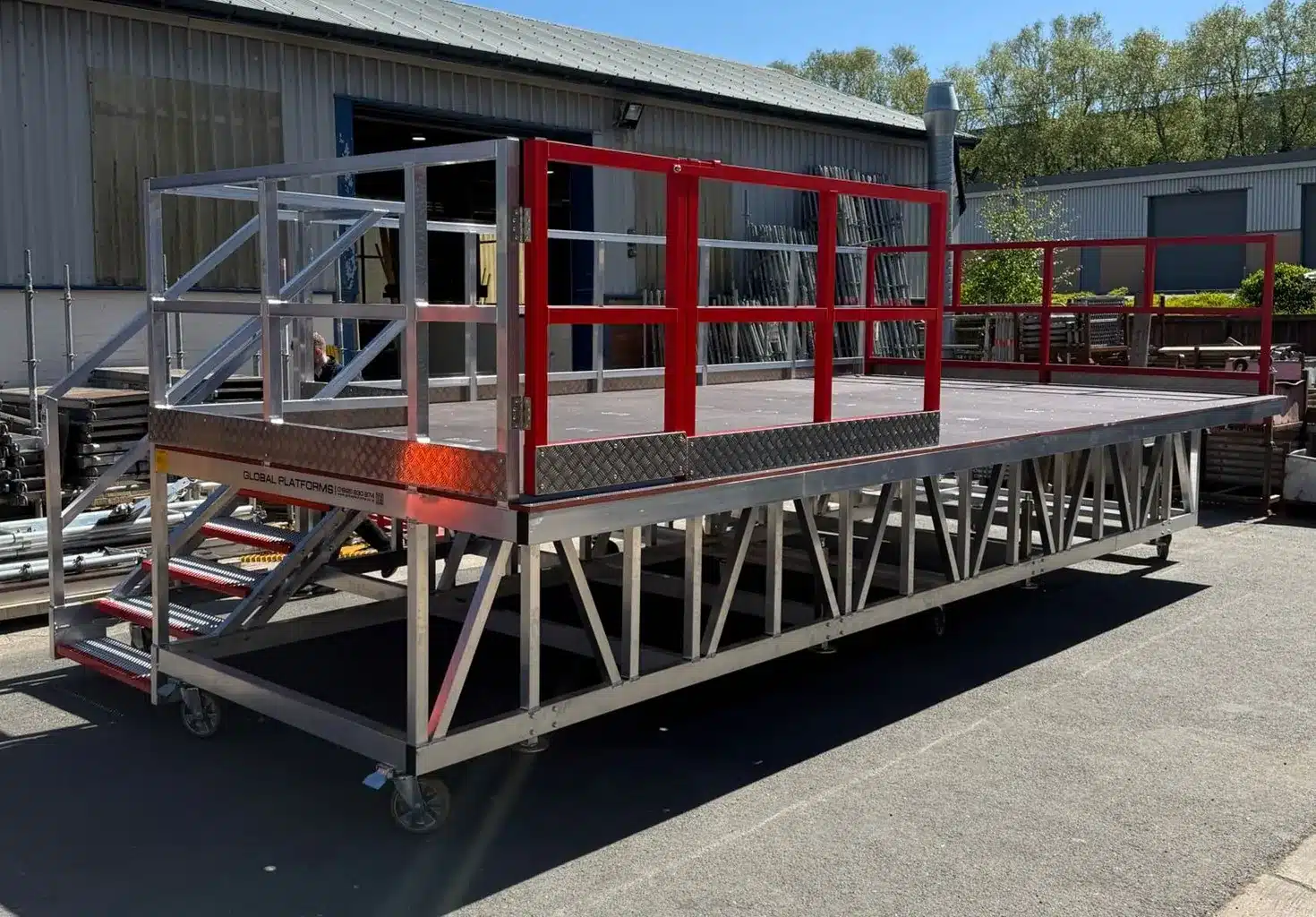
Aircraft Assembly Staging: Reaching Alignment Points Under a Continuous Deck
How lift-out panels, a 3D clash check and a BS EN 131 redesign shaped bespoke aircraft assembly staging for a UK defence aerospace programme.
Our Services
Tracked Spiders
Available to rent with a wide range of sizes and specifications
Bespoke Platforms
Available to rent with a wide range of sizes and specifications
Truck Mounts
Available to rent with a wide range of sizes and specifications
Scaffolding
Available to rent with a wide range of sizes and specifications
Let’s work together and create a
safer working environment for all.
Ask for a survey and outline design. We’ll compare temporary, semi-permanent and fixed options, and recommend the most efficient route for your site. You get predictable costs, a shorter programme, and it’s right first time.