

Mobile Access Towers Explained: When a Tower Beats Scaffolding
Trusted by
















A mobile access tower is often the quickest way to get a safe, guarded working platform up for a short job. It sits between a stepladder and a full scaffold: quicker to put up than scaffolding, far safer than a ladder for anything more than a few minutes' work. This guide covers when a tower is the right choice, how towers should be built and inspected, and when you are better off with scaffolding or a spider lift.
Key takeaways
- Towers suit short, light-duty jobs on firm, level ground where a fixed scaffold would be overkill.
- Use a tower built to BS EN 1004 and follow the manufacturer's instructions for stabilisers and configuration.
- Towers should be built using either the Through the Trap (3T) or Advance Guardrail (AGR) method, both recommended by PASMA and the HSE.
- Inspect after assembly, before first use, after anything that could affect stability, and at least every 7 days it stays in place.
What a Mobile Access Tower Is
A mobile access tower is a freestanding, prefabricated tower, usually aluminium, with a working platform at the top, guardrails and toe boards, built-in access and lockable castors. It is assembled from frames, braces and platforms to a set configuration, and can be moved short distances on the same level once everyone is off it and nothing is left on the platforms.
Towers designed to BS EN 1004 come with guardrails at the right height, proper platforms with built-in access and stabilisers or outriggers. Older H-frame or so-called domestic steel towers often lack these features, which is why the standard matters when you hire or buy.
When a Tower Is the Right Choice
| Situation | Best fit | Why |
|---|---|---|
| A short job at one or two heights, on firm, level ground | Mobile access tower | Quick to build, fully guarded platform, easy to reposition along a wall or ceiling. |
| Weeks of work across a whole elevation, several trades | Scaffolding | A fixed platform that carries more people and materials for longer. |
| Height beyond a sensible tower, or soft, sloping or awkward ground | Tracked spider lift | Reaches higher and over obstacles, and the outriggers level the machine. |
| The same task in the same place, every day | Bespoke platform | Built around the task, with no assembly each time. |
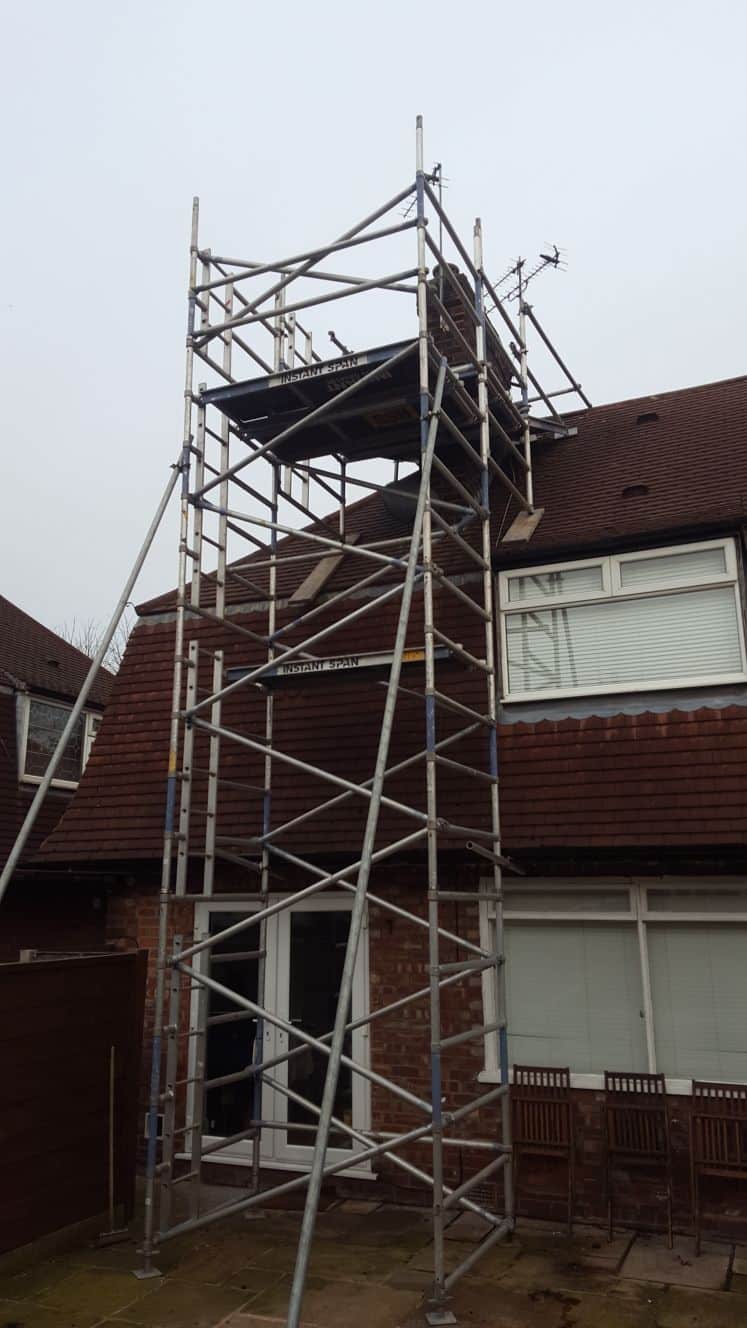
Building a Tower Safely: 3T and AGR
The biggest risk with a tower is during assembly and dismantling, when the platform is not yet fully guarded. PASMA and the HSE recommend two methods that keep the person building the tower protected at every stage:
Through the Trap (3T)
The person building the tower works from a trapdoor platform, sitting through the trap to fit the guardrails for the level above before standing up on that platform. No special components are needed beyond the tower itself.
Advance Guardrail (AGR)
Temporary guardrail units are fitted from the level below and locked in place before anyone climbs onto the next platform, so the platform is already guarded when they arrive. This needs the AGR components designed for that tower system.
Setting Up and Using a Tower
- Build on firm, level ground. Lock all castor brakes and use base plates or adjustable legs where the instructions allow.
- Fit stabilisers or outriggers exactly as the manufacturer's instructions say for that height and configuration.
- Climb on the inside of the tower, using the built-in ladder or stairs, never the outside frames.
- Never move a tower with people or materials on it, and watch for overhead cables, slopes and holes when you do.
- Check the maximum wind speed in the instructions and stop work, or tie the tower in, when it is exceeded.
- Do not use ladders, boxes or steps on the platform to gain extra height.
Inspection Rules for Towers
Where a tower is used for construction work and someone could fall 2 metres or more, it must be inspected after assembly and before first use, after any event likely to affect its stability, and at intervals of no more than 7 days while it stays in place. The inspection needs a written report.
A new inspection and report is not needed every time a tower is moved to a new position on the same site, but a pre-use check should still be done each time, and any alteration such as removing guardrails means it must be checked again before use. Many teams use a tag system on the tower so everyone can see when it was last inspected.
Sources: HSE and PASMA guidance on mobile access towers.
When to Choose Something Else
Towers have limits. If the ground is soft, sloping or uneven, if the work is high or needs reach over an obstacle such as a conservatory, or if the job will run for weeks with several trades, a tower is rarely the best tool. A tracked spider lift handles awkward ground and reach. Scaffolding handles long-duration, multi-trade work. For tasks that repeat in the same place, a bespoke platform removes assembly altogether.
How We Help
We supply mobile access towers, scaffolding and tracked spider lifts, so we can recommend whichever suits the job rather than pushing one option. Tell us the working height, the ground and how long the work will take, and we will come back with a clear recommendation.
Not sure if a tower is enough?
Tell us about the job and we will recommend the right access, from towers to scaffolding.
Frequently Asked Questions
What is a mobile access tower?
A freestanding, prefabricated tower, usually aluminium, with a guarded working platform, built-in access and lockable castors. It is assembled from frames, braces and platforms to a set configuration.
What standard should a mobile access tower meet?
Look for towers designed to BS EN 1004, which come with guardrails at the right height, proper platforms, built-in access and stabilisers.
What are the 3T and AGR methods?
They are the two assembly methods recommended by PASMA and the HSE. 3T means Through the Trap, working from a trapdoor platform. AGR uses advance guardrail units fitted from the level below.
How often does a tower need inspecting?
After assembly and before first use, after any event likely to affect stability, and at intervals of no more than 7 days while it stays in place, with a written report.
Does a tower need re-inspecting every time it is moved?
A new formal inspection and report is not needed each time it is moved on the same site, but a pre-use check should be done, and any alteration means checking again before use.
Who can put up a mobile access tower?
Someone competent to do so, such as a person who has completed PASMA training, following the manufacturer’s instructions.
Can you move a tower with someone on it?
No. Everyone must be off the tower and no materials left on the platforms before it is moved.
When is scaffolding better than a tower?
When the work runs for weeks across a whole elevation, involves several trades or needs to carry heavier materials.
When is a spider lift better than a tower?
When the ground is soft, sloping or uneven, the work is high, or you need to reach over an obstacle such as a conservatory.
Recent Posts

TG20:21 Compliance Sheets Explained: When Does a Scaffold Need a Design?
What TG20:21 compliance sheets are, when a scaffold needs a specific design instead, and what paperwork to ask your scaffolding contractor for.
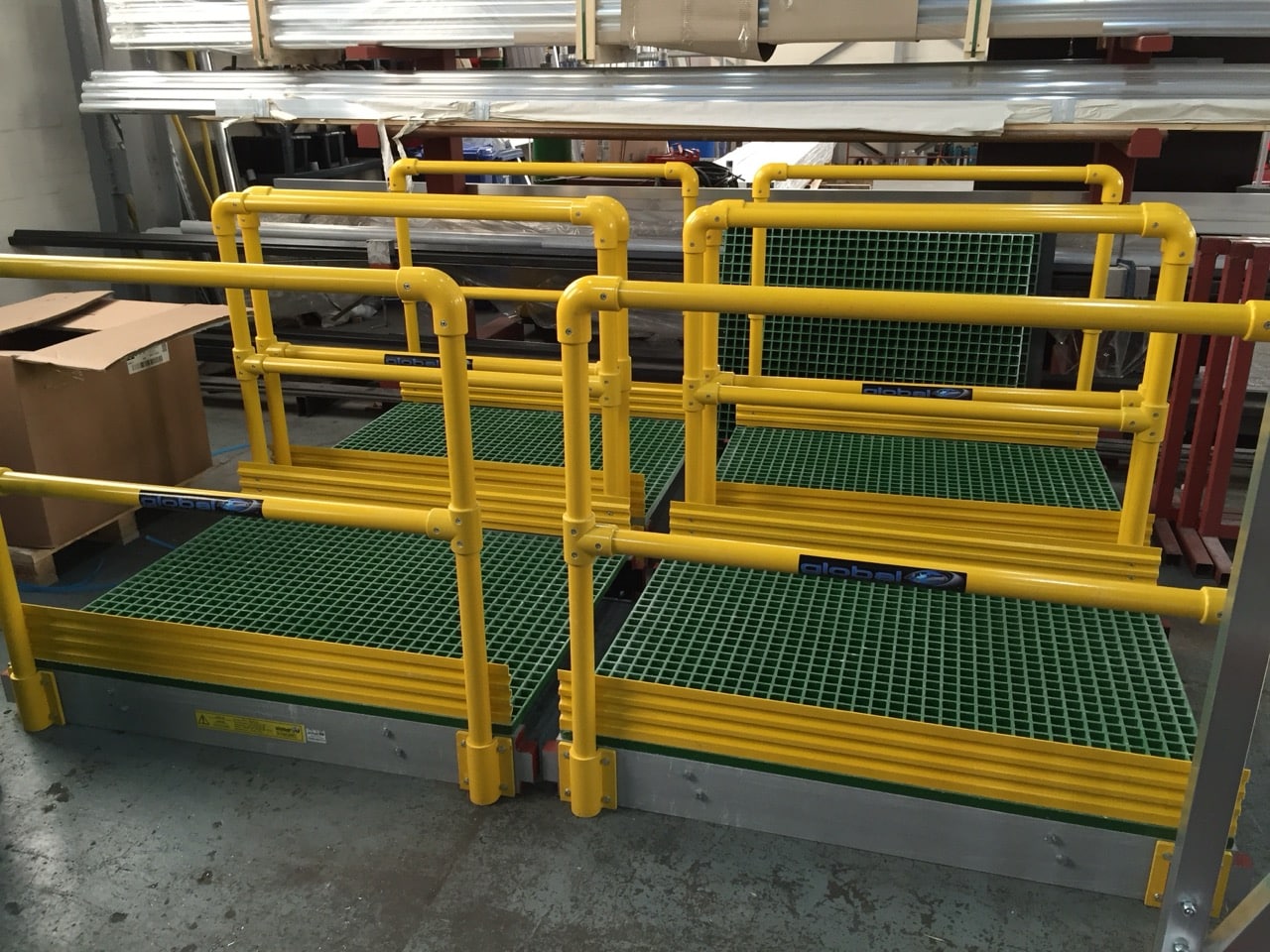
Pit Boards and Inspection Pit Safety in Train and Vehicle Depots
Inspection pits are a work at height hazard. How pit boards, edge protection and safe pit access keep depots and workshops safe.
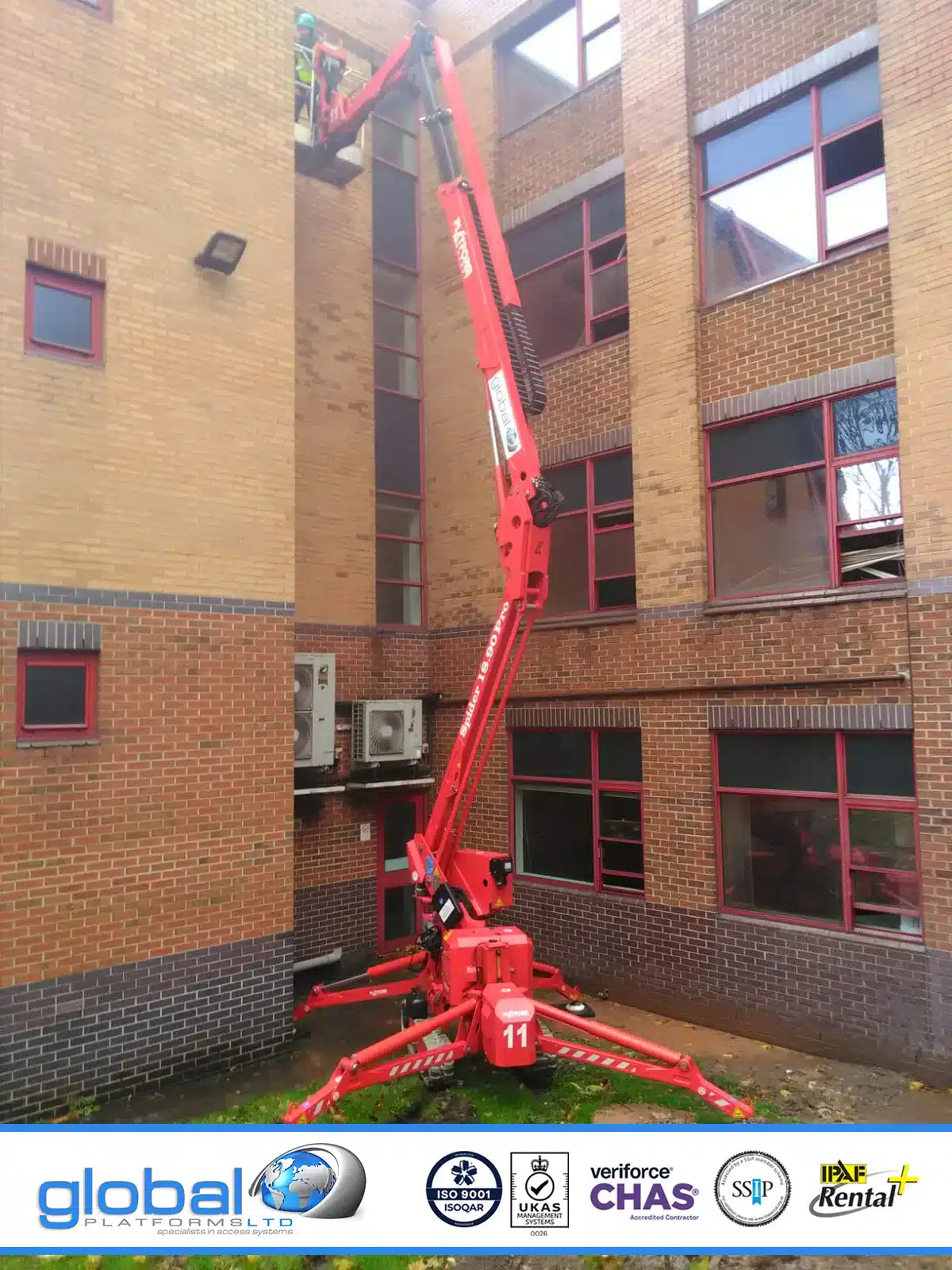
Ground Conditions for Spider Lifts: What to Check Before the Machine Arrives
Outriggers put a lot of pressure on a small area. Here is how to check the ground before a tracked spider lift arrives, including spreader pads, hidden voids and a simple checklist.
Our Services
Tracked Spiders
Available to rent with a wide range of sizes and specifications
Bespoke Platforms
Available to rent with a wide range of sizes and specifications
Truck Mounts
Available to rent with a wide range of sizes and specifications
Scaffolding
Available to rent with a wide range of sizes and specifications
Let’s work together and create a
safer working environment for all.
Ask for a survey and outline design. We’ll compare temporary, semi-permanent and fixed options, and recommend the most efficient route for your site. You get predictable costs, a shorter programme, and it’s right first time.